
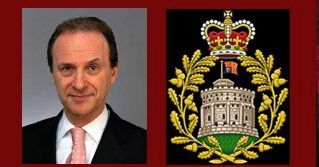
Photo credit: Courtesy of David Maislish
In this year’s Diamond Jubilee, Queen Elizabeth II celebrated 60 years on the throne. She is Britain’s longest-lived monarch and second-longest reigning monarch – despite facing little-known assassination attempts in 1970 and 1981. But to English author-historian David Maislish, theses assassination attempts come as no surprise.
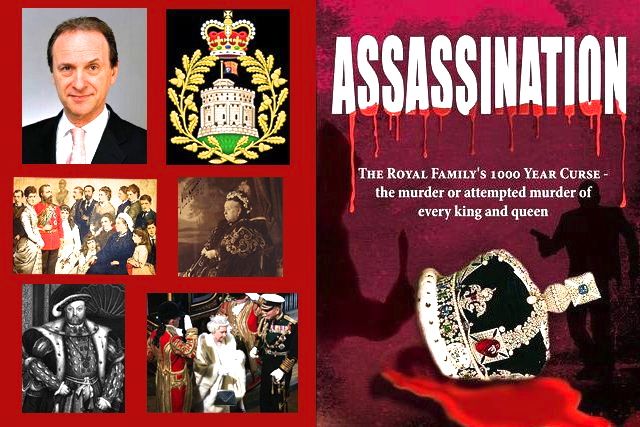
Hollywood on the Potomac chatted with Maislish from London about his book: Assassination: The Royal Family’s 1000-year Curse
“I was thinking of writing a book about the monarchs who had been murdered of which we have 11 and as I was writing about those 11,” he told us, “I thought maybe I could investigate and find out whether perhaps more had been murdered. That led me to another 12 who one could say were probably murdered, probably/possibly and that brought me a total of 23. From there I wondered what happened to the other 22. Why was it that people tried to kill 23 and didn’t try to kill the other 22? What marked them into two groups? My research showed that there weren’t two groups at all as to intent to murder. The truth was that someone tried to murder every single one of them, it’s just that some got away with it and some didn’t – but every one was the subject of an assignation attempt at least once and some very many times. That’s how I came to write about the entire history of all the monarchs because every single one of them someone tried to kill.”
“Did you find a common denominator in the types of people that were attempting the assasinations?” we asked
“It changed over time although you can’t draw a very clear line because there’s a lot of overlap. At the beginning it was a rival who tried to … we’re talking about 1,000 years ago……… a rival would try to do it. Then it came to be when an opposing, someone in an opposing army would try to kill the British monarch so that the English army would have lost its leader and would lose the drive to fight. Then it became a rival family when various families were fighting amongst themselves over a few centuries here. Then it moved to lunatics and then it moved to people basically who didn’t like England and took out their anger by trying to kill the monarch; even though by then killing the monarch did not really have any effect on English policy – nevertheless it was a way for them to express their outrage.”
Let’s move up to the current monarchy. You said that there were two assassination attempts on Queen Elizabeth, – who were they, and what was that all about?
“There were sort of three attempts. The first one was by a guy who was just angry – a young guy who wanted to be famous. He intended to shoot her at the Trooping the Color Ceremony which is when the Queen inspects troops near Buckingham Palace on her official birthday. She has a real birthday and an official birthday. So the official birthday is a day when statistically, it’s always sunny so that’s a better time to inspect the troops. He, unfortunately for him but fortunately for the Queen, could not get hold of any live ammunition, so he shot at her with five blanks. He was locked up. She, of course, was startled but not injured.
A few years later she was on a tour of Australia and traveling by train inland with Prince Philip and Princess Anne and somebody, we don’t know who, put a log across the rail track intending that the train should hit the log, be derailed and tumble down into the valley below. Fortunately, the train was arriving too early and the last thing they wanted to do is for the Queen to arrive at the station before the reception committee is ready and the band is prepared to play whatever music they want. The driver had slowed this train down to a crawl so when it hit the log rather than falling over, or falling off the track, it just continued for a few hundred yards with the log trapped under the wheels; then they removed it when the train stopped. We don’t know who that was, whether it was an IRA thing or an anti-monarchist group or whatever.
Then a few years later she was on a tour of New Zealand in a town called the Dunedin on a walk-about and another young man, a very angry guy, decided that he was going to shoot her. He took a rifle and went to stand at the side of the road where he thought he would get the best view of the Queen. That was a mistake because if you go to the space where you get the best view it’s very likely that other people will also think that’s the best place to stand. Two policeman fortunately went to stand next to him so he was unable to unwrap his rifle so he just ran into the street, pointed it up the road and shot at the Queen. But, it seems that he was out of range. Later on he was caught for some other robberies and he confessed and was put in prison where he later committed suicide.”
We wondered about the Queen’s Guard and whether they are much more cautious than maybe we are here – how does that all play out?
“She is well guarded because she the most important person here and the most obvious target,” he explained. “But as I’m sitting here now in my office 200 yards away is the Barbican Festival Hall and I went there recently to a concert and the Queen was sitting three rows in front of me. I could have … I could have reached out if I’d stretched properly …… I could have reached out and touched her. She leaves before everyone else and I was near the end of the row. It’s quite easy – someone did jump out in front of her – some young girl, and curtseyed in front of her which made the Queen laugh. So yes, it could have been an assassin.”
What is the propensity for going after siblings of monarchs?
“Not much. Very few assassination attempts on them; there have been a few. One of Queen Victoria’s sons was shot in the back when he was in Australia. The fellow who did it was hanged. There are a few others many, many years ago but that’s not very common because if you want to get rid of the monarch you want to kill the monarch not their child. If you want to make a statement against England you want to kill the main person, not someone second or third in line. So it’s not so bad for children or for siblings.”

What do you see as the future of the monarchy?
“I think it stays the same. I mean one thing’s for sure, if we didn’t have a monarchy they wouldn’t have created it in the last ten years or even the last 100 years, but now that we’ve got one people seem satisfied and we particularly like, I think, our head of state who is not a politician. It’s good that the senior political person is a subordinate. He has to bow to somebody and that’s sort of a nice touch. The other thing is it’s symbolic, people like it. People say it’s good for tourism and nobody rejects that because it doesn’t get in the way. She has no executive powers, she has no political power, she can make no decisions but when things go wrong, when the economy’s bad, when there’s trouble you can hardly blame her. It can’t be her fault. Things are good, she’s a great symbol.
And of course, she now pays income tax. The millions that are provided for her are quite controlled now. It doesn’t go so far to all the families, all the members of the family as it used to. It really is a drop in the ocean when you think of all the money that is doled out by the government, it’s really not significant. She raises money herself, her palaces are open to the public. It’s good for tourism. It brings in more money than it costs so it’s not an issue any more.”
Who do you think will be the next monarch when the Queen dies? Will it skip over Charles or not?
‘There’s no way that it will skip him if he’s still alive. If he’s alive he would actually get it,” he explained.
Then his wife goes along as the Queen or will she become the consort, how does that work?
“Well she is a Queen, but she is a Queen Consort not Queen Regnant. So Charles’ wife – you know they’re talking about it because she’s his second wife – not calling her Queen but just leaving her as a Duchess; but I think when the time comes people will back off that and just find it not necessarily appropriate to be rude to her. Likely she will be Queen. She’s behaving herself very, very well at the moment, keeping a low profile so yes she’ll be Queen and Charles will be King. But when he becomes King he will be the first one in the whole history who will have waited longest to become the monarch.
Video credit: LetterboxView
