
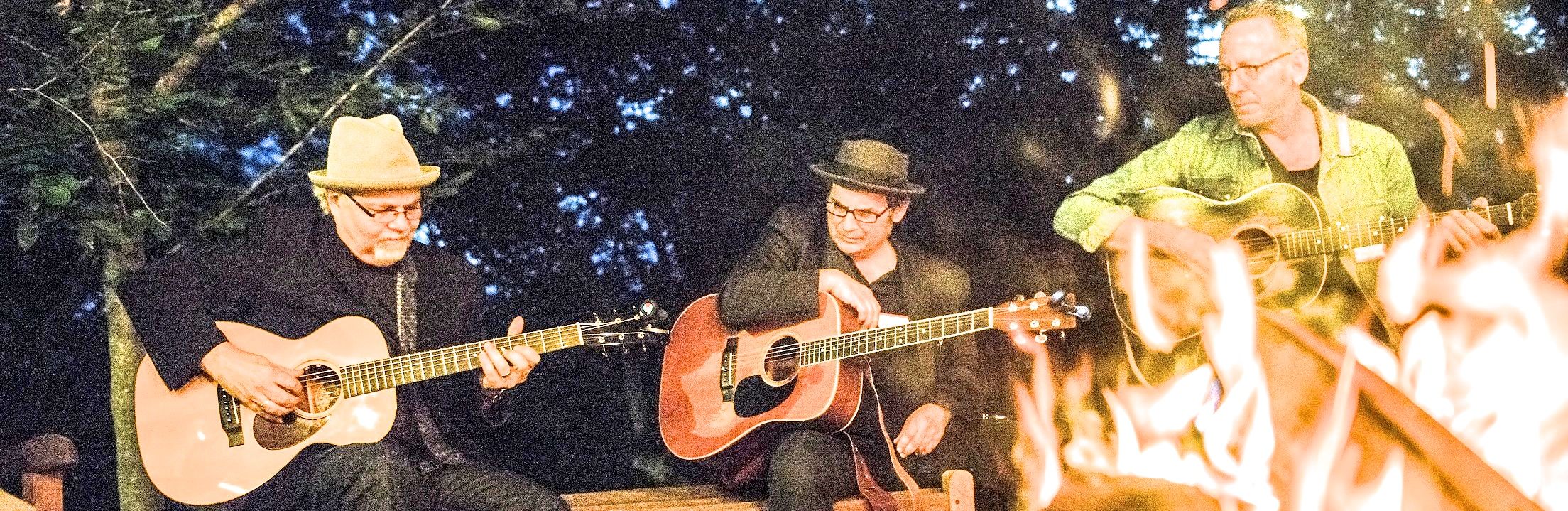
Photo credit: Slider photo by Stacy Pearsall
“I started writing songs when I was about 10 years old,” said singer-songwriter Darden Smith in an interview with Hollywood on the Potomac. “Then I sort of got more into it in high school playing all sorts of coffee shops and things like that and really bad bar bands. Then I went to college and when I was 19 started writing songs and playing in clubs around Austin, Texas. I did that all through 19, 20, 21 and then made my first record at 23 and put it out on my own little label and it took off from there.”
Darden will be in DC area on April 8th and 9th hosting a songwriting retreat for veterans in Virginia for his non-profit SongwritingWith: Soldiers series before heading to Houston to give the keynote presentation at the Global Alliance for Arts & Health 25th Anniversary conference. He explains the art & health connection below.
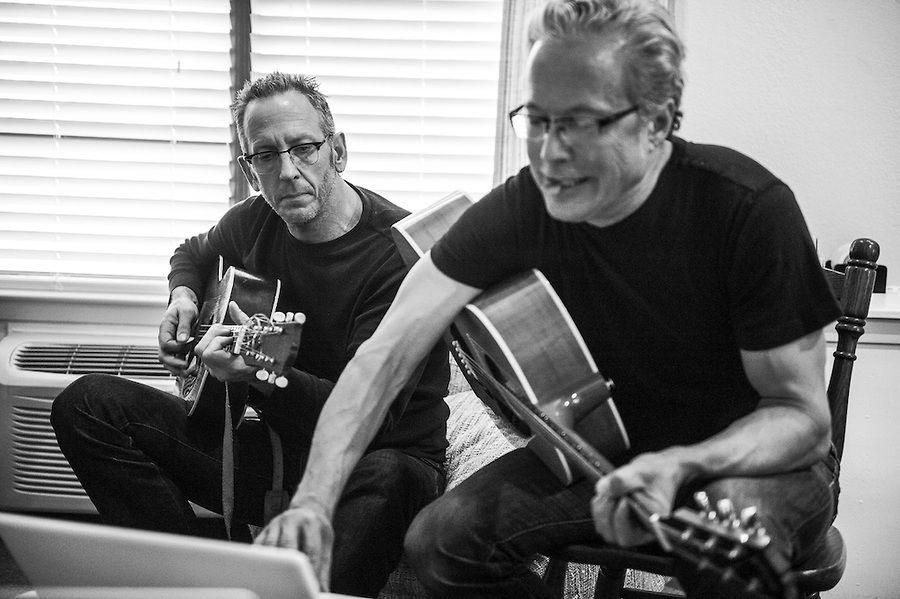
Photo credit: Andy Dunaway
We were a bit stunned that he could have his own record label at 23. He explained that he got a little help from his friends. …. sort of like a kick-starter campaign in today’s world. “I got people to give me money to make a record and then just printed it up, pressed it up. I got really lucky – I was really driven, I was really motivated. I worked at it and started when I was 10, so I just stumbled into this thing. I come from a totally non-musical family and I just found songwriting. It was a mystery to me that I could do it. I lived in a little bitty town on a farm and I didn’t know anyone else who wrote songs, so it’s something that I had that no one else had. So that was part of it for me when I was very young – I had a secret weapon.
I had mentors as well when I got a record deal at 26 and was on Columbia Records for nine years. I had publishing deals, so I was getting paid to write songs. Then I had patrons that were helping me do my art. So I had help all those years. It’s not like it’s a one man shop. You have to look around for help – every now and then you need help. But I have been very fortunate, but I also worked extremely hard.
You have to write a couple of hundred songs really before you get good ones. Before that, you’re just learning the basics of the craft. I worked at it. It’s a job. It’s a craft. It’s not like it just sort of happens, it’s hard work. I was aggressive in my writing. I was aggressive in finding gigs to play and I realized I needed to make a living, so that’s when I put a record out. I lived really cheap. I lived like an artist does, like a young artist is supposed to live. I lived in a very inexpensive house and I ate very inexpensive food. I didn’t have much. That’s how I was afford to be able to focus on my craft and my art and I kept working at it.”
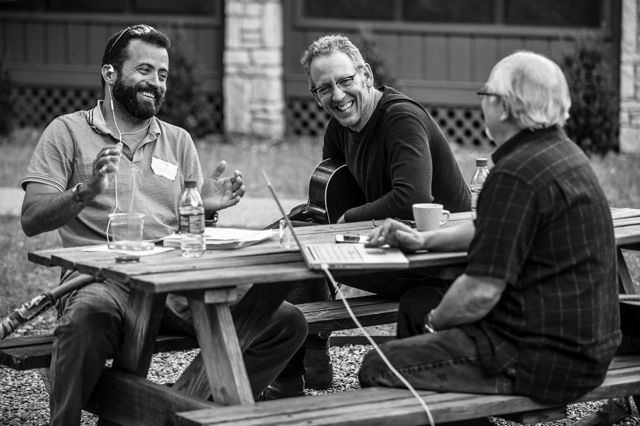
Sgt. Palermo Deschamps with Darden Smith & Gary Nicholson – Photo credit: Andy Dunaway
His business tips for beginning songwriters are: “Practice, work hard, do without, don’t go into debt, get good at your craft and learn how to do business. Learn how to make phone calls, no one is discovered. You put yourself in front of people who are looking, but you’re not discovered. At the end of the day, everyone is good. What else do you have? And that other thing that you have is your ability to work hard. So, it’s not an easy life being a musician, being a songwriter, being an artist in general. It’s just not an easy life. Make sure that you know how to live without certain material things.
You can have those material things once you become successful, but don’t expect it to happen right off the bat, because it just doesn’t. 1 out of 999,000 people, one of those people are going to get lucky. It looks like you can get very lucky very easily, but that’s actually not the case. Most musicians quit by the time they’re 25 or 30. By the time they’re 30, probably 80% of them drop out. They just can’t make it work. It’s not a flaw, it just didn’t work. But the way that you get past that is you keep a balance and you live on what you make. You don’t chase … don’t put the cart in front of the horse, because you have to be able to afford to live and you have to be able to afford to focus on your work. And if you’re working another job, you can’t focus on your craft. So you have to be able to afford to live on what you make as a musician. It’s very key. I think it’s the missing link that is not told to young musicians.”
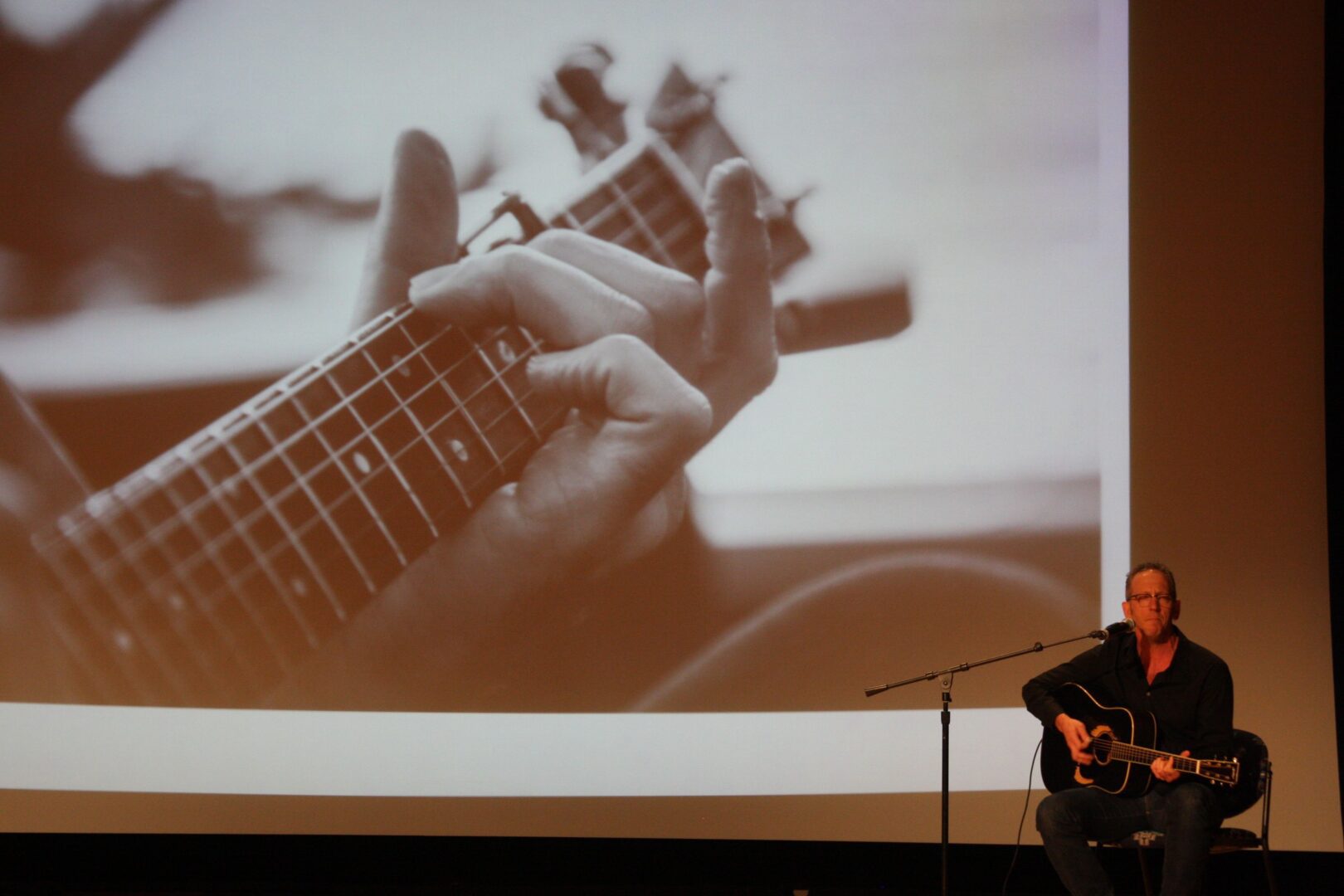
Smith wears many hats in the business and prides himself on transcending boundaries in the music industry. He has released 14 albums during his 28 year career, written a symphony for the Austin Symphony Orchestra and presented a TED Talk at SxSW. He is most proud of his SongwritingWith series and Be An Artist Program. “The Be an Artist Program is where this kind of work started for me,” he said. “I started it about 10 or 11 years ago – going into schools and talking to kids, talking to students about creativity and about seeing themselves as an artist.
Through that work I just kept getting asked to do interesting things and that’s where I discovered the idea of writing songs with people that don’t write songs. That fascinates me. I kept getting asked to do different kinds of projects with the Be an Artist Program, whether it was conflict resolution work or corporate creativity or working in the homeless shelter and that became the ground work for my understanding how to do this work so that I could start, so that I could come up with the process of SongwritingWith.
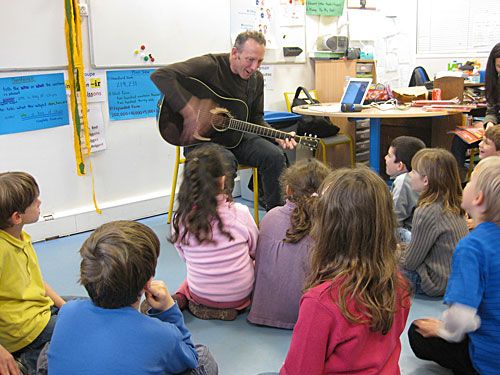
Photo credit: Matt Lankes
Any time you tell your story and someone listens to your story, no matter whether you’re writing songs or just telling someone on a bus, it restores your dignity because someone is listening. So when you listen to someone’s story, what you’re really doing is seeing them as human and you’re connecting on a human level. That’s what SongwritingWith: Soldiers is. That’s what we try to do. I have a couple projects based on the SongwritingWith concepts. The majority of the work involves SongwritingWith: Soldiers. But what SongwritingWith is, is that I got very interested in writing songs with people that don’t write songs and using the songwriting process, the collaborative songwriting process as a way to help them tell their story.
A lot of these people have experienced trauma in this lives or they have a story to tell. So what happens is that I sit down with them in a room and it could be one person, it could be three people, it could be 12 people, 15 people, it doesn’t matter. I’ve done it with as many as 300 people and it’s pretty wild. We start talking and eventually someone says something that’s poetic because people tend to speak in poetry especially when they’re speaking about difficult areas of their life. Then I just keep drawing stories and phrases out of them and then we put together a song using their words. That’s what the songwriting with process is and the different programs I have are based around that.
Darden Smith – Photo credit: Michael O’Brien
Darden wanted to clarify that he is not a healer, not a therapist. He is a songwriter. “But I know what songwriting does for me when I write songs and I have something, maybe some sort of pain inside or something’s bugging me, and it’s just very cathartic … there’s something really magical about putting lyrics that are honest, putting them together with a melody and creating – you create this little piece of magic, a song. I know quite often it’ll really help me work through issues in my life and I think it has had that affect with other people as well.
I think people write songs because they have something to say, in the beginning. It’s a really a beautiful way to express their feeling when they have something to say. It’s just a very entrancing . I mean, why do people draw pictures? Why do people throw pottery? Why do people do any of these things? Because they have something to say. This is a medium that is very, very good when you have something to say. It feels good to do it.
A really good example would be the SongwritingWith: Soldiers program that we have. We recently worked with a group of veterans in Long Beach, California at the VA Hospital and one guy came in, one guy in particular, came in and in the very session that was sitting in, his arms were crossed with a very kind of down look. After the first song, he was just sitting upright and he was gesticulating with his arms, not as before when he was just wound up just really tight. We wrote songs for two days and at the end of the second day, he stood up and he hugged me and he said ‘this is like amazing. I’m addicted to writing now.’ And he smiled. And he said,’ you know, I don’t smile much, but this is making me smile.’ That’s pretty positive to me.”
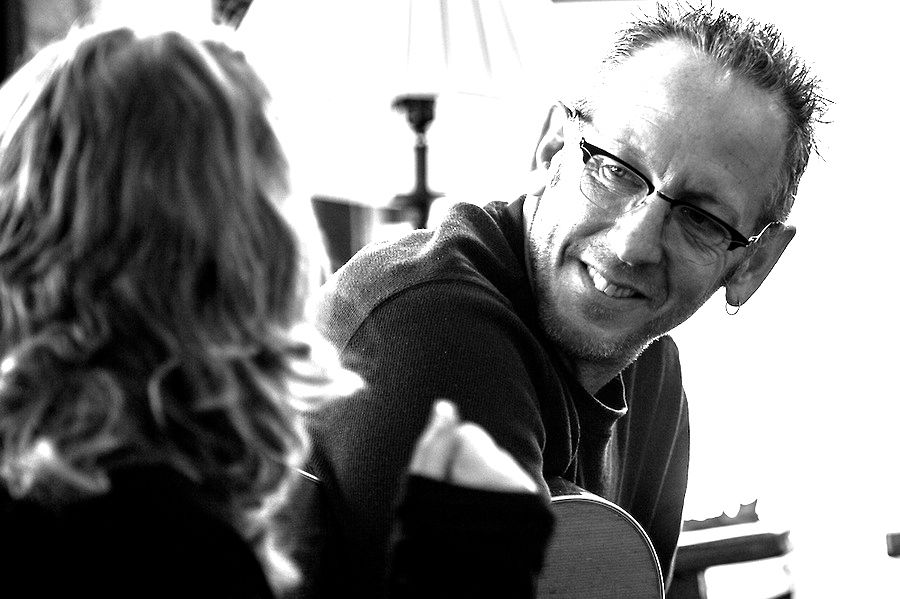
Photo credit: Andy Dunaway
“I don’t know that everyone is supposed to be a songwriter.” Darden added. “I think everyone has a creative possibility. Songwriting is actually a very bizarre and weird art form, craft and some people just don’t hear it. They don’t hear melody. They don’t hear words. It just doesn’t flow easily for them. Maybe they’re supposed to be chefs. Or maybe they’re supposed to be fly fisherman or whatever. It doesn’t matter. Not everyone’s supposed to be a songwriter. Everyone can write a song if you collaborate with a songwriter, someone who knows how.
I’ve been writing songs for 40 years, so it’s kind of easy for me to write a song. If it’s not, if the process isn’t easy for you, you can get bogged down in the process and your story never gets out. So the trick is for everyone to realize that they have a gift. They have a process. If they do that process, their story gets out much easier than trying to do a process they’re not good at. So if you’re not a songwriter, why would you want to force yourself to be a songwriter? Go do what you’re good at. I was able to quit working at other jobs when I was 23. I’ve made a living off of songs and music since I was 23. As for a decent standard of living, it’s a moving target.
I took my dad on the road to England probably eight years, maybe nine years ago. He went with me so he could see what I did for a living. This one day after I had a 16 hour day, I got up very early, drove to the gig, got home late, all that kind of thing and he says the next day we were driving to the next town: ‘You know, I never really realized that you worked hard.’ I said, yes, it’s hard work, Dad.”
His latest record is called Love Calling and was released in September 2013. He’ll be doing a lot of work with SongwritingWith: Soldiers this year; doing some corporate creativity work, doing some different kind of writing and then probably start recording a record towards the beginning of 2015.
Love Calling:
