Photo credit: Courtesy of the author
“I grew up in upstate New York – what I would just call a typical family, like from the Ken Burns series,” author Ann Atkins told Hollywood on the Potomac. “We were the ones that went west with the little travel trailer to go see a national park at Yellowstone, that kind of thing. My parents were just the traditional type. They were supportive of me, but still with the constraints of that day. You know, you can’t go out to play with all these other boys unless there’s other girls there too…..that kind of thing. I thought it was weird.”
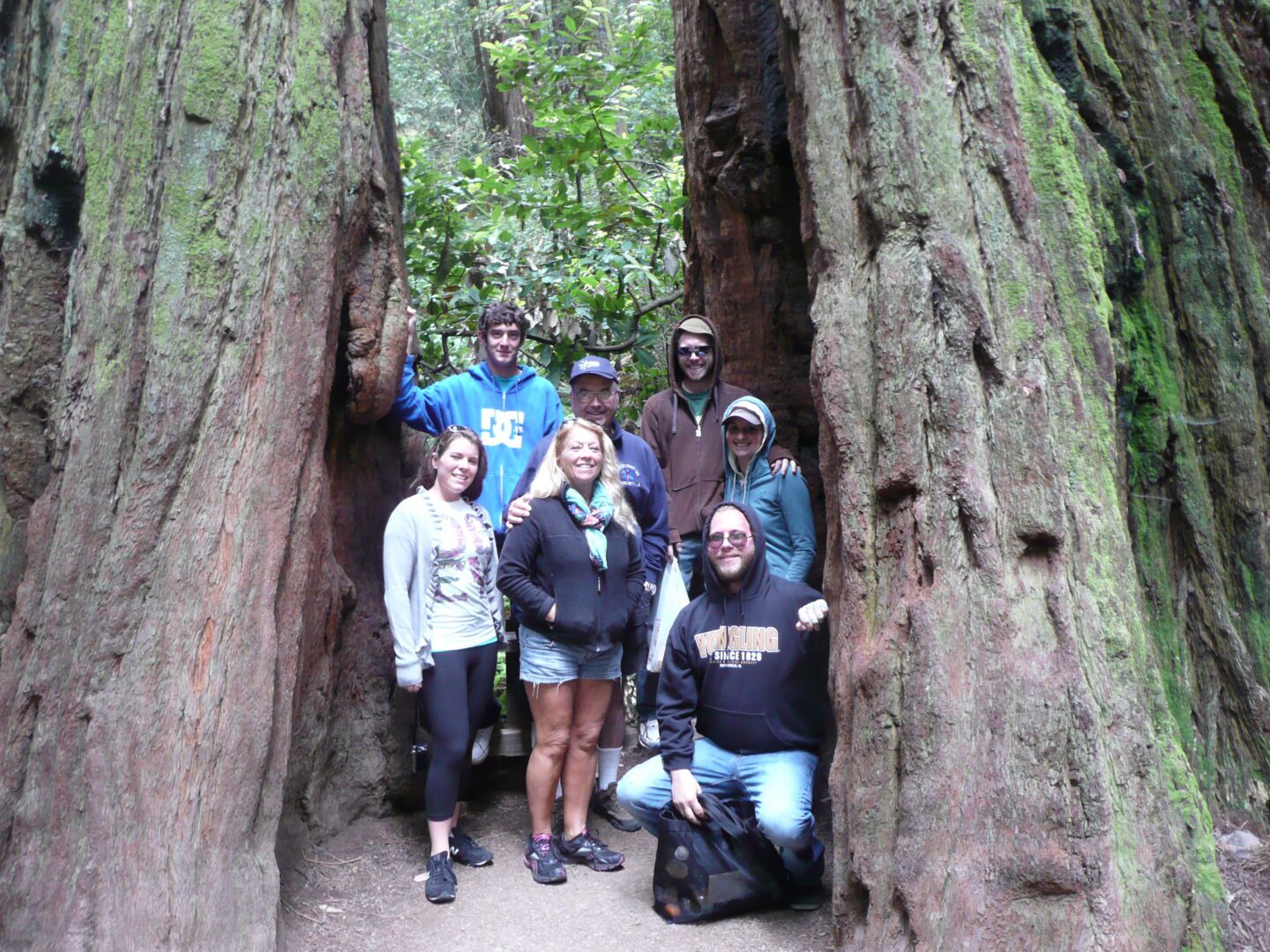
Ann and family at Muir Woods
“Then when I was in high school, which was in the ’70s, that’s when girls were really breaking out and by heavens we weren’t going to be just teachers or nurses anymore. We were going to be accountants and go after any of those traditional male fields. For me, I was going to be an accountant which, if anybody had really talked to me or if I’d had any self-awareness, would have been a totally ridiculous idea because I don’t care about numbers,” she added.
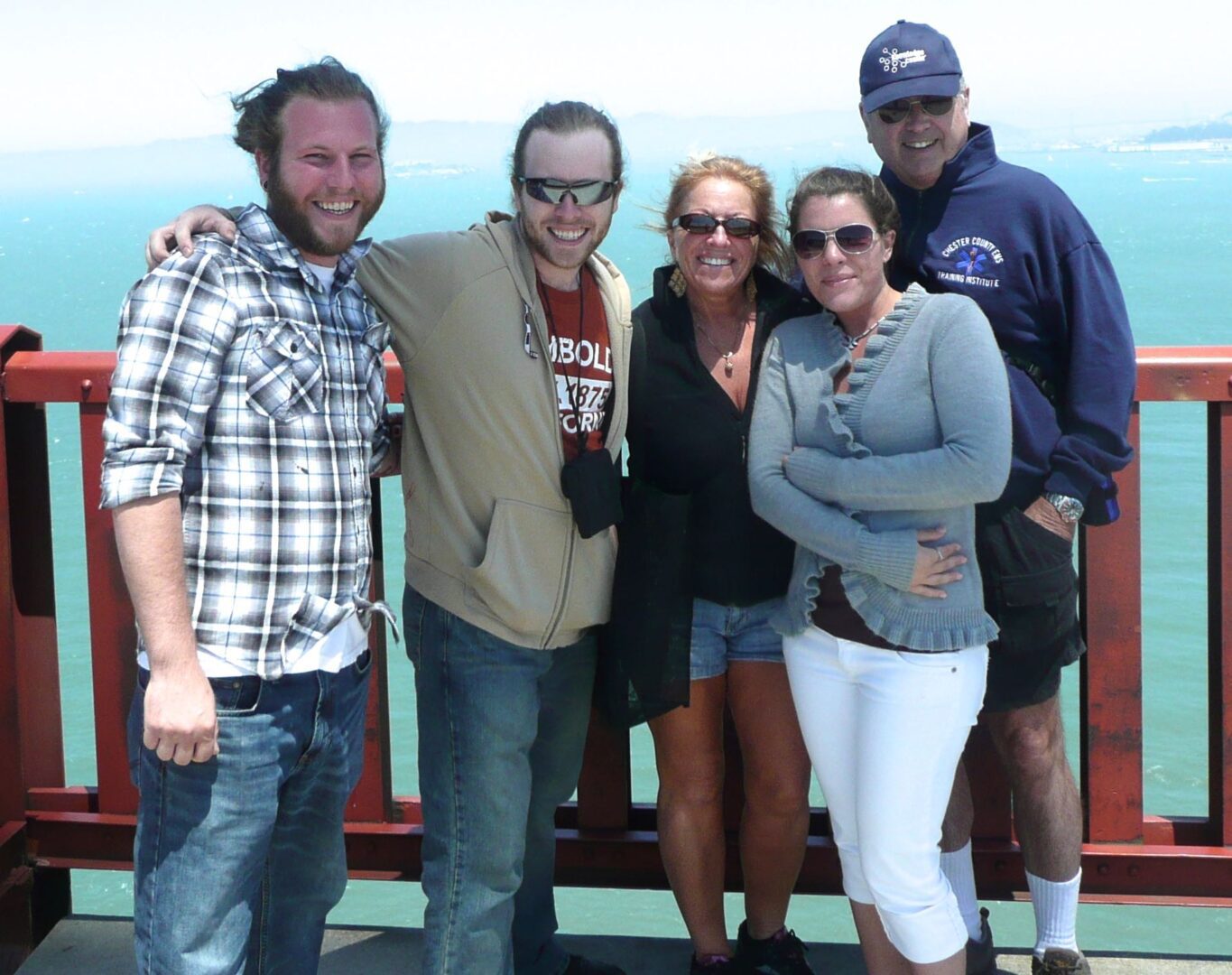
Ann Atkins and family at The Golden Gate Bridge
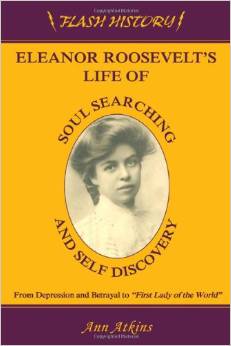
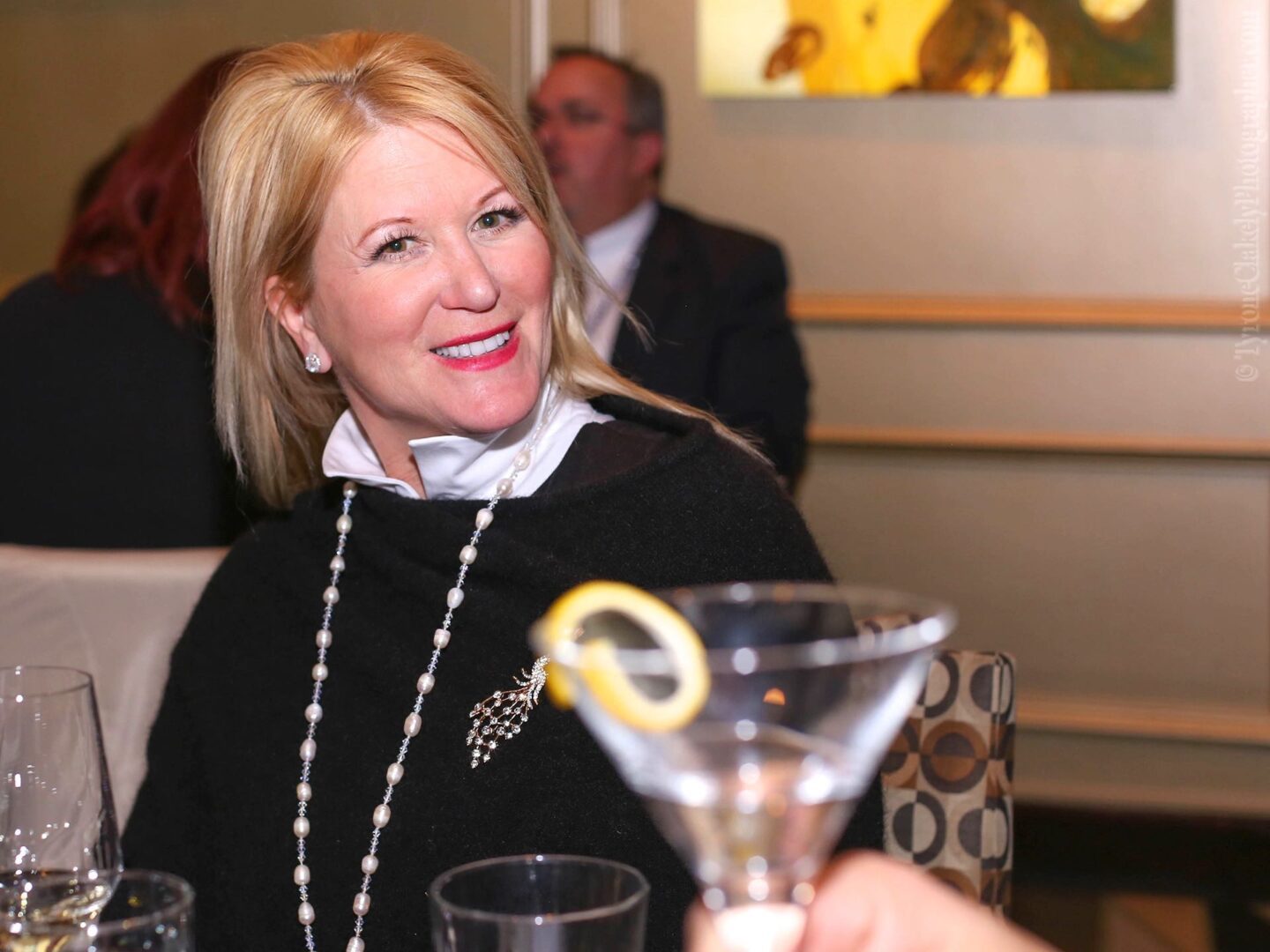
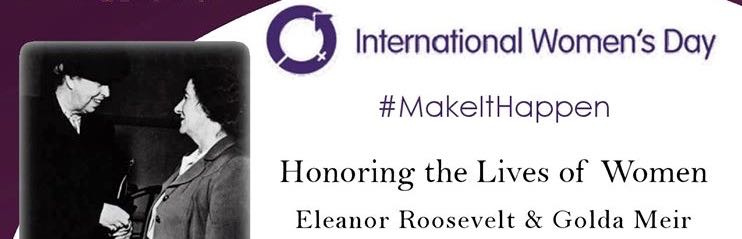
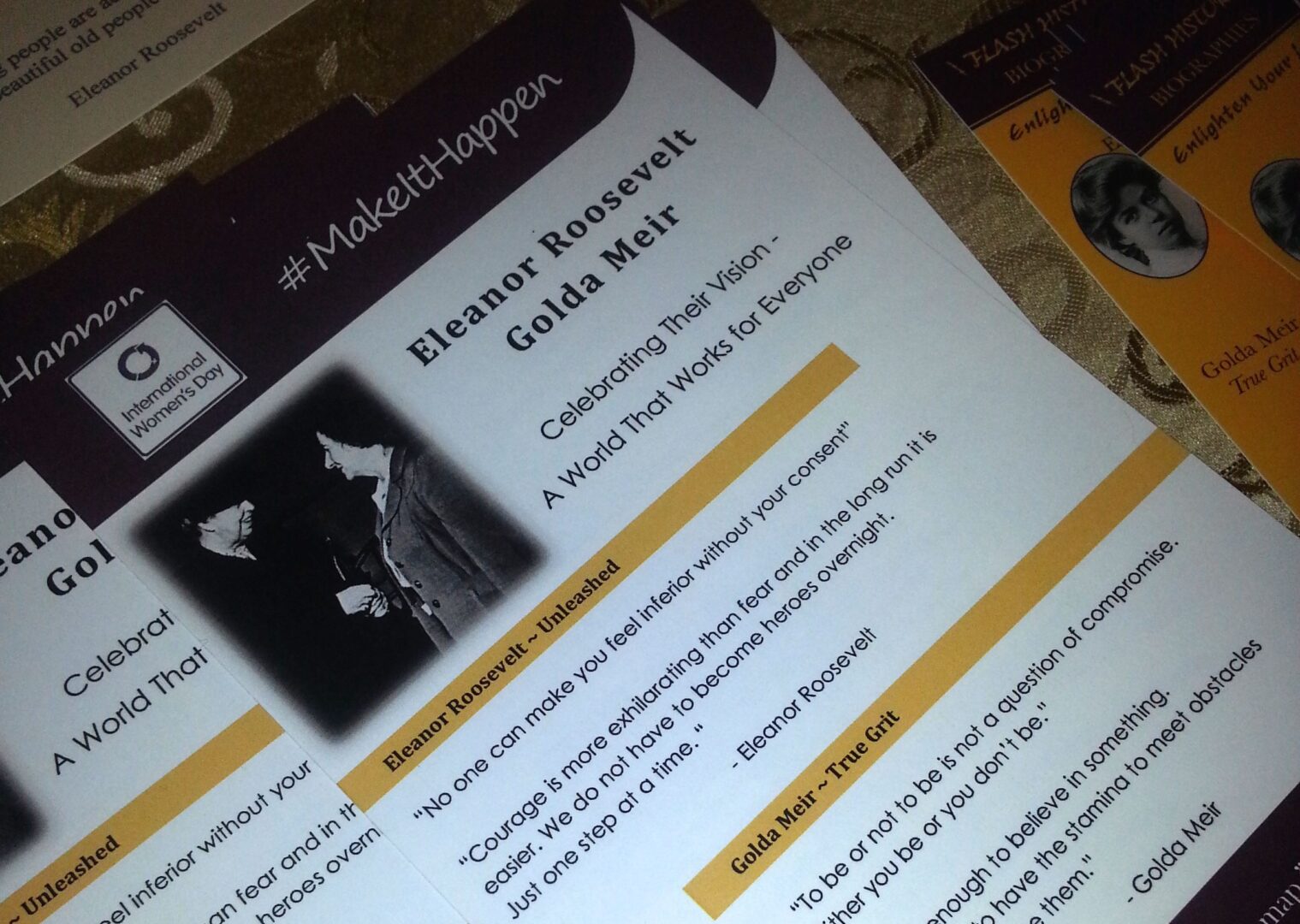
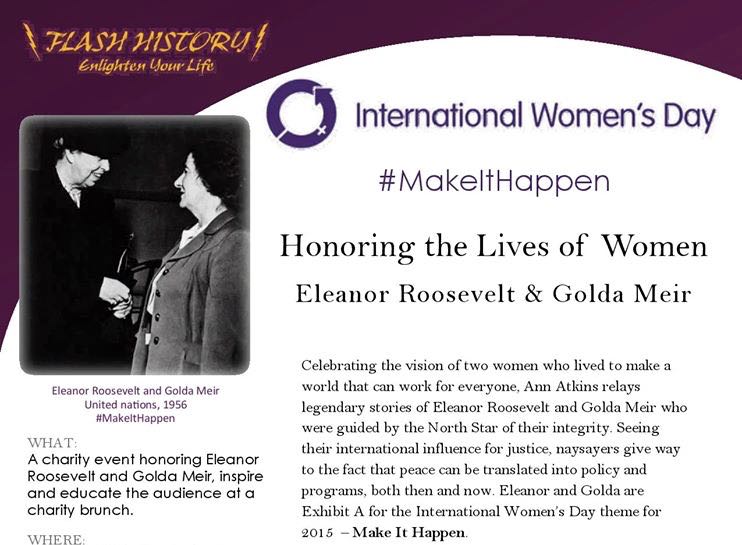
Atkins was the guest of honor at an International Women’s Day brunch honoring the lives of Eleanor Roosevelt: A Life of Soul Searching and Self-Discovery & Golda Meir: True Grit hosted by Kimberly Warfield of WWSC at The Willard Hotel in downtown Washington, DC. “Eleanor’s story is a do-it-yourself guide that shows us how to accomplish many things. From a childhood plagued with drunks and drama queens, Eleanor must now discard her dependency on Franklin and face off with her grand dame mother-in-law. Refusing to cave in to society’s rules, Eleanor’s exuberant style, wavering voice, and lack of Hollywood beauty are fodder for the media. First Lady for thirteen years, Eleanor redefines and exploits this role to a position of power. Using her influence, she champions Jews, African Americans, and women. The audacity of this woman to live out her own destiny challenges us to do the same. After all, it’s not about Eleanor. Her story is history. Her life shows us how to live.” Flash History Press
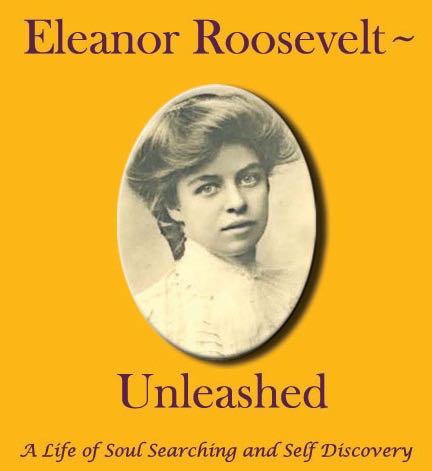
“Up until 1918 Eleanor was what we would call the good wife. She was very much there to support Franklin and he was a womanizer and was, literally, until the day he died. When that broke, when the story broke of Lucy Mercer, Eleanor’s world just was shattered. She struggled with exactly what we’re talking about right now. Who’s she going to be? What is she going to do? Eleanor struggled with depression. She struggled with being anorexic. She was suicidal. This wasn’t for just a short time. She was that way for 2 or 3 years. She would go and visit what we call the Grief Statue in Rock Creek Cemetery which was what Henry Adams had built for his wife who committed suicide. It’s my opinion, and just my opinion from everything I can read, that Adams’ wife committed suicide because her husband was having an affair. I think Eleanor was considering, ‘Well, maybe I should just end this.'”
“My second husband was just delightful and awesome and always supported my writing. When I had that, that’s when I started writing and I was in my 40’s when I remarried. We went to Hyde Park and we went to Eleanor’s house and I wanted to get a book of her quotes and there wasn’t one. Then I thought well I’m just going to come home and make a book of her quotes. But then I realized I didn’t want to just have that without the story behind it. That’s when I started writing the story behind each of her quotes. By then, you’re just doing a biography,” Atkins explained.
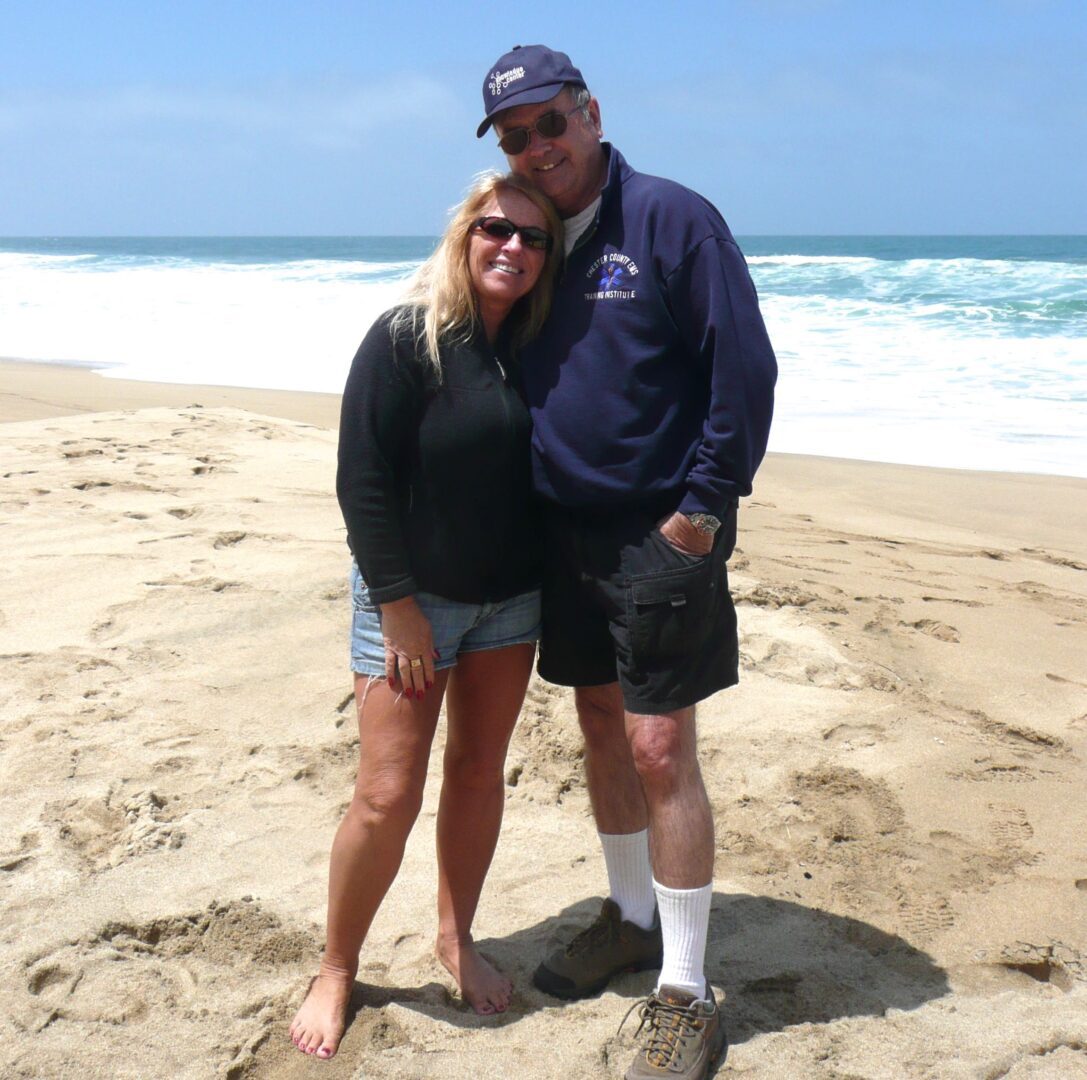
Ann and Ed
“I loved stories and sounds,” Atkins continued about the early years. “I have always been interested in hearing people’s stories that could have been from the garbage man. It’s not like it had to be somebody famous to want to know their story, I was just very interested in the human experience. I think it was just always to … because I see life as a journey and history as a map even as a kid…… gather things from people’s stories that would help me. That’s where this love of biographies came in. It was really back then as a kid, just gathering information from people’s stories. How it started then, was I’ve always loved quotes. Remember though, it didn’t start until I was in my 40’s because I was busy in my first marriage and I had 3 children and then went through a divorce. I was very much the epitome of an enabler, just always doing for other people and ignoring my own self. I, in any way, did not want to have the courage that it takes to be a writer to put it out there. I just really realized I wanted that essence, that heartbeat in history to be what led to the biography, not the academic perspective, so I went after that. I have also written a novel though that I’m having edited right now and that also has a sense of helping people, giving people information for the journey, helping them wake up some. It’s based in the ’60s. It’s kind of a coming-of-age story. But mostly right now it’s just the Eleanor biography, the Golda Meir biography and I’m also working on Marie Curie as my third book.”
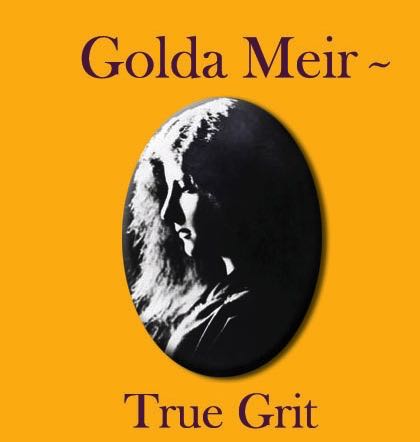
“As a child prodigy in principles, Golda Meir has a repertoire of noble rebellion throughout her life from Midwest America to the Middle East. This resolve will bring equal pay and education to the Arabs and Jews in Palestine, hospitals and housing to Africans, and most well known Golda will be a signer of the Declaration of Independence for the rebirth of Israel. Undaunted by the objections of her family, sects of Jewish culture, and the back-door politics of powerful governments, Golda’s DNA demands pragmatic decisions that reveal her destiny and the unwavering conviction that all people can live in peace and with dignity.” Flash History Press
“Golda comes from a … I would say … lower income Jewish family, and not some mother that said ‘Yes, Golda, go.’ You know, go get them. No. They both wanted Golda to just assimilate into the American culture. They had moved from Russia to Milwaukee. I don’t know if many people know she grew up in Milwaukee, which I think is hilarious. See, that’s exactly it because if I were to say,’Oh, she was a Jewish woman from New York City’ then we would say, ‘Oh, no big deal, New York City, really.’ But no, she’s from Milwaukee.”
“Where Golda she differs from Eleanor,” she noted, “is that she was just born with this doggedness in her spirit. Eleanor learned to be that way, Golda was just born that way. I think if Eleanor had been nurtured she would have started this much sooner in her life. Golda, she couldn’t have started it any sooner, she truly was just born that way. The main reason Golda was able to succeed and go as far as she did in a man’s world was … she was Labor Minister, she was a Foreign Minister. She then of course became Prime Minister and that was because she had David Ben-Gurion crashing through the ceiling for her. Because even other Jewish men were saying, ‘Oh. No’. Let alone that Orthodox Jews were just appalled that a woman was in some of these jobs. Even men within the cabinet level were thinking, ‘Oh Golda can’t. She’s a woman’. David Ben-Gurion just totally believed in her. Because of that she was able to, as I say, ‘not just hit the glass, but she just crashed through it’. But again, that’s because Ben-Gurion was there. He was ahead of her. He was like a George Washington of Israel. He then was saying, No. No. She’s our Foreign Minister, thank you very much.”
Hollywood on the Potomac decided to ask a question of Ann that was probably both insensitive to her subjects as well as not being politically correct, but curiosity won out and we asked her how both managed to have such confidence when they were not the most physically attractive women in the world. That of course, had to be a negative in an already judgmental world as regards the capacity of women in the work force. “Where do you think, in exploring both of their lives, they garnered such tenacity, determination, confidence and the boldness to do what they did?”
“In some ways, I think that helped us admire them even more. It’s not like they were Katherine Hepburn, who of course was gorgeous. You kind of have to have a leg up. I think that continues to speak for Eleanor and of the women of her day. She was such a breath of fresh air that people thought ‘Oh good. Look at everything she’s doing. Look at the deck she’s got and she’s not beautiful.’ It was just meaningful to people that they too could break out of this mold of Oh well. If you’re not drop-dead gorgeous, you can’t be anything.”
“Eleanor did not get that kind of enormous strength from her family life growing up at home. The one really strong point was when she went off to a private school when she was in her teen years. She was there for 2 years in England at a boarding school. The head mistress there totally understood Eleanor. That’s where I got the wording for the book, from the head mistress. It was the nobleness of her part in that she really mentored Eleanor for those 2 years. But when Eleanor came back home she had her coming out party and that’s when she started dating Franklin. It was 3 steps forward, then coming back and her dating Franklin would have been the 2 steps back. After the affair with Lucy Mercer in 1918 is when Eleanor wrote about the time of depression and everything. Her mother-in-law Sarah was just horrendously difficult and never liked Eleanor or certainly didn’t give her a lot of support until the very end. Eleanor just found it in herself and she answered the who am I question and her answer was that quote that we know, No one is going to make me feel inferior without my consent.”
What do you think that these two women taught us? What is it they imparted to the rest of the world, the rest of the women?
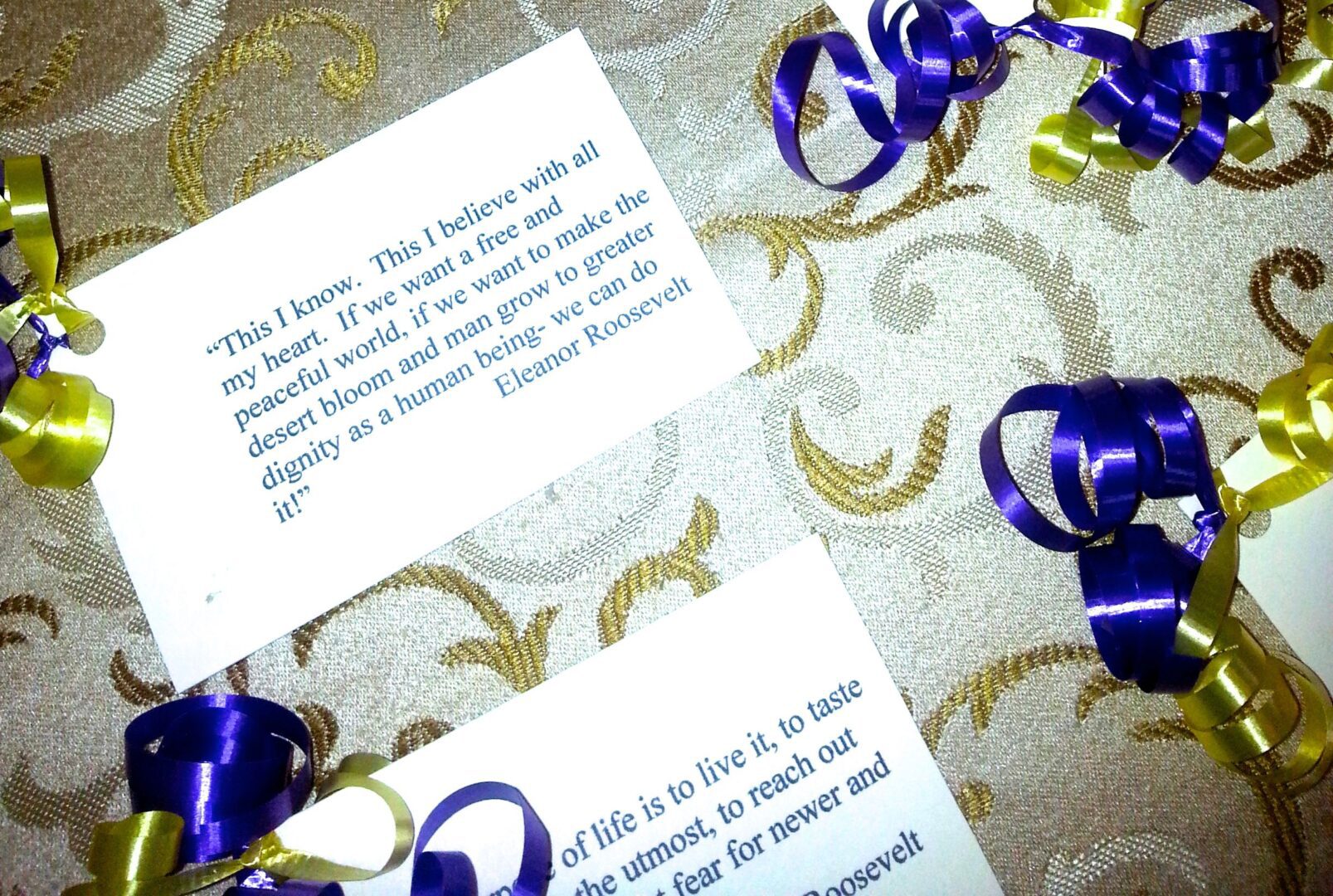
“One of the things, and this came out as I gave my talk at the Willard for International Women’s Day, is that they had all the classic leadership qualities. It was similar to other great leaders that men or women that we can think of. There’s a humility to them and yet a sense of assurance. They challenge us. Those are all kind of common things that everybody has thought of; but, here’s the thing – these two women give us imagination. They could think and see something before it even happened and that takes imagination. Women have imagination, we just maybe don’t nurture it enough. We don’t give it enough credit, so therefore it doesn’t come to pass. Eleanor could see that there needed to be a document for the world on human rights. Guess what we have – the Universal Declaration of Human Rights. That takes imagination. Golda could believe what her country could be. Back then, in the ’40s or even back before in the ’30s, who would have thought there was ever going to be an Israel. Yet, there it is.“
“I think what I loved about this deeper dimension that I’ve come to understand about them is that is so universal: We think of ourselves still as, maybe when we were little kids. I remember when I was a little kid I imagined being a writer, I lost it for so long. I would sit at my little word school desk in our playroom in our house in Sedona, New York, typing on a typewriter that was my grandfather’s, pretending to be a writer. I lost my imagination about that and it took me until 40 to be one.”

The Willard
Who do you think are the Eleanor and Golda of today’s world? “I think there are people like Elizabeth Warren who are really going after the causes of the middle class and advocating good schools and colleges. I think that is admirable. Basically though, I’m kind of coming up blank, but I really can’t think of any men either.”
The event was produced by Kimberly Warfield of We Will Survive Cancer and has been recognized with The National Association of Professional Women, Woman of the Year Award 2012/2013. She also serves on the Advisory board of a variety of charitable organizations in the DC Area.