
by intern Sakura Buker
Photo credit: Sakura Buker
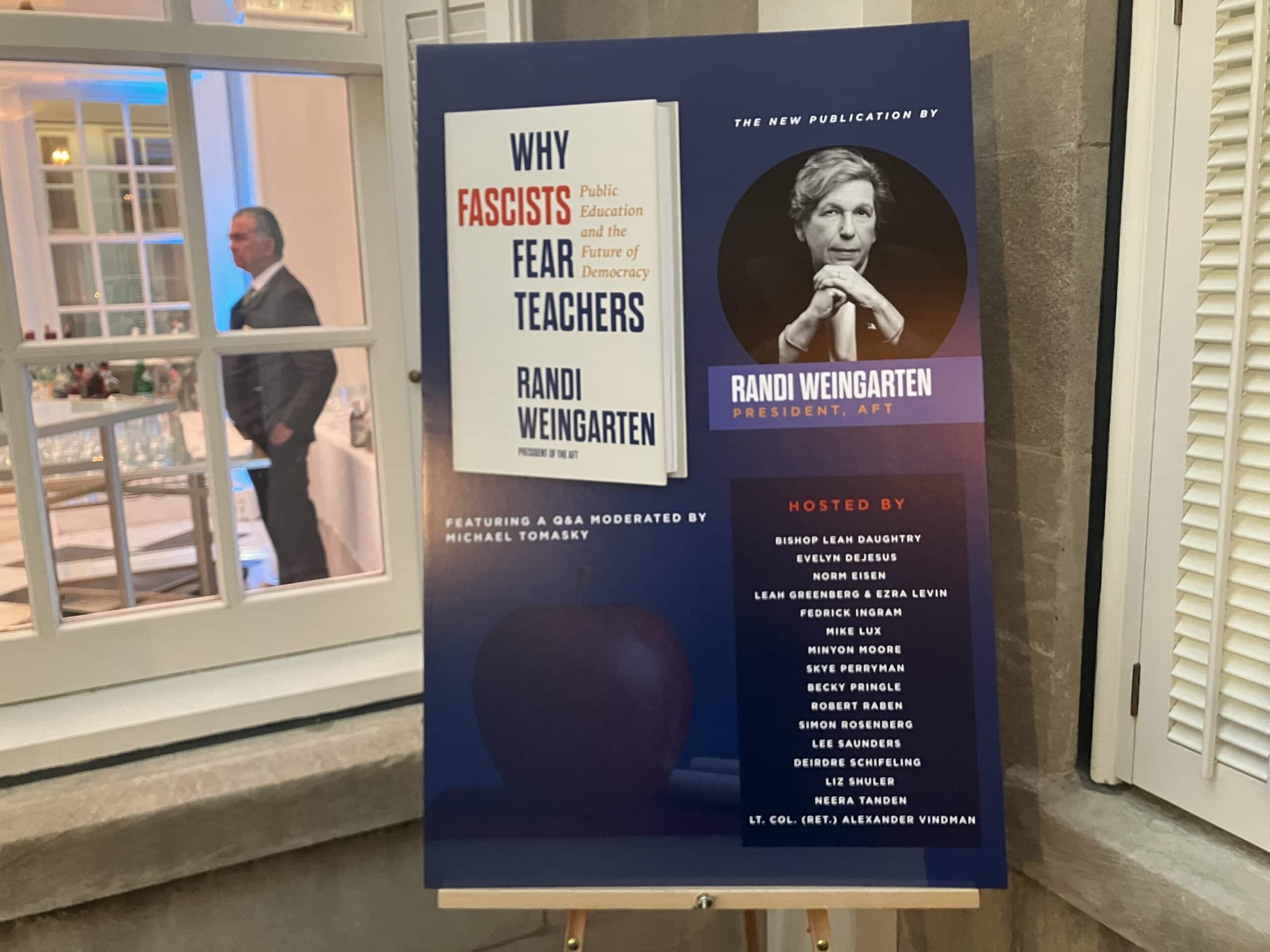
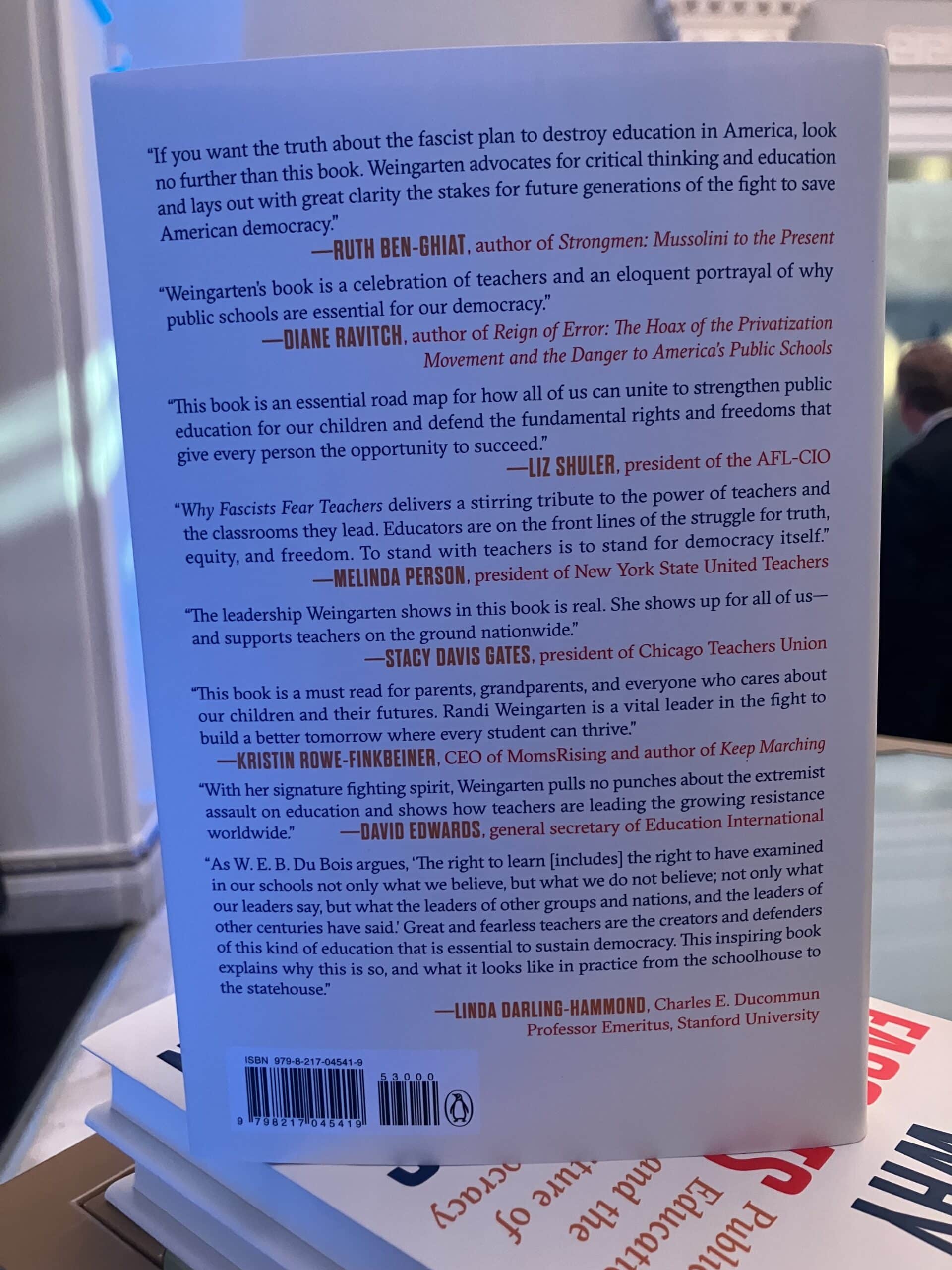
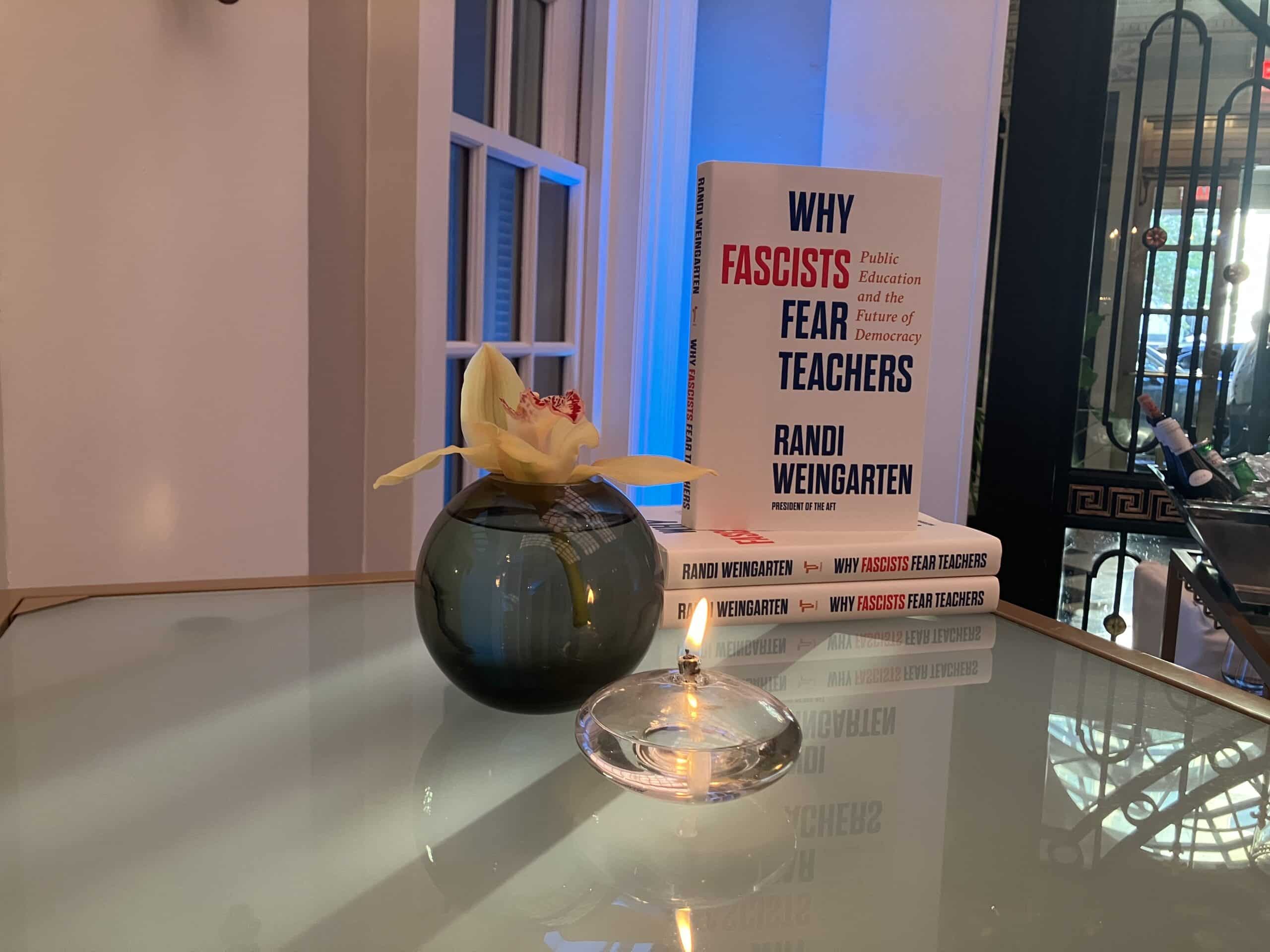
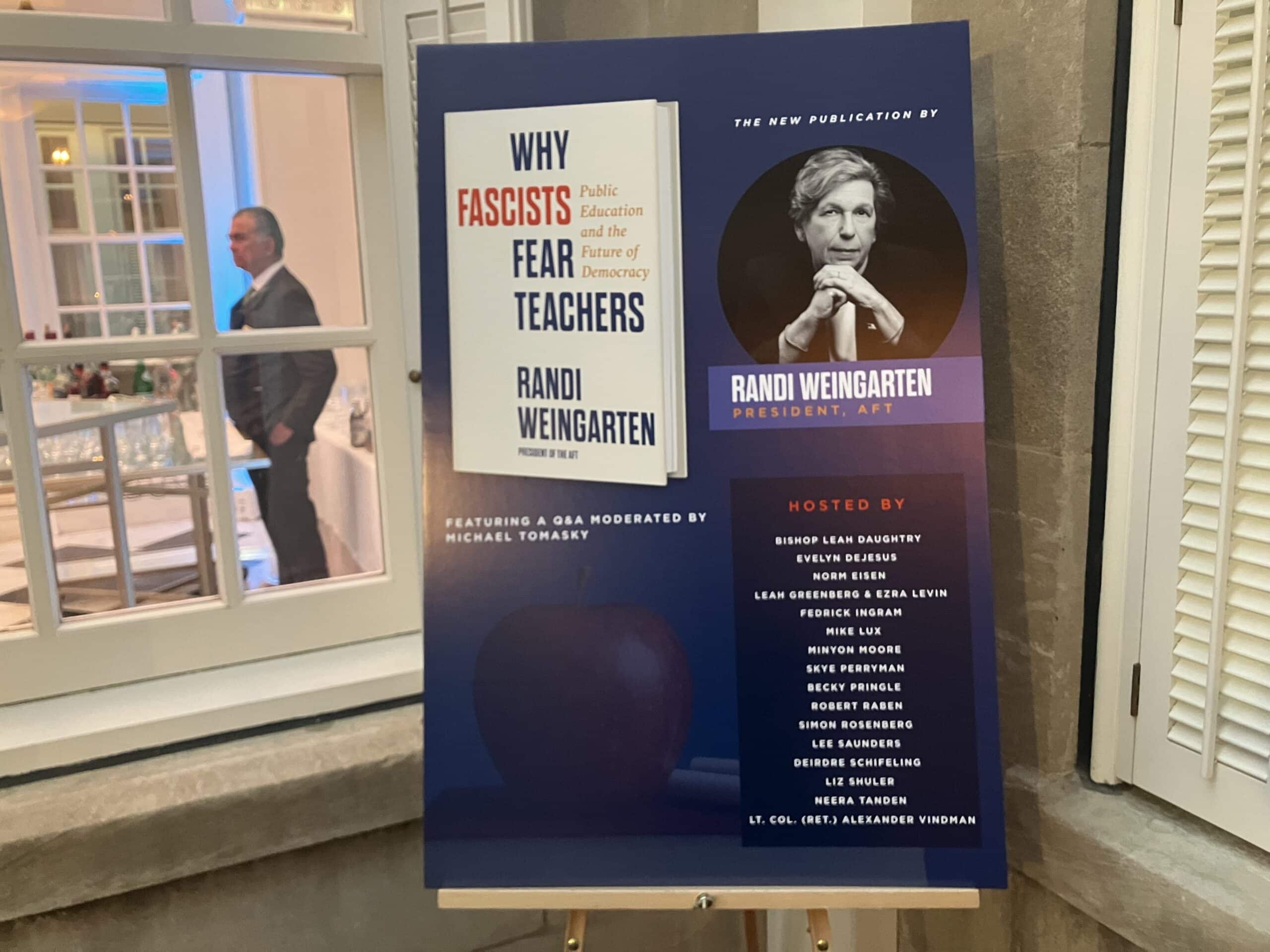
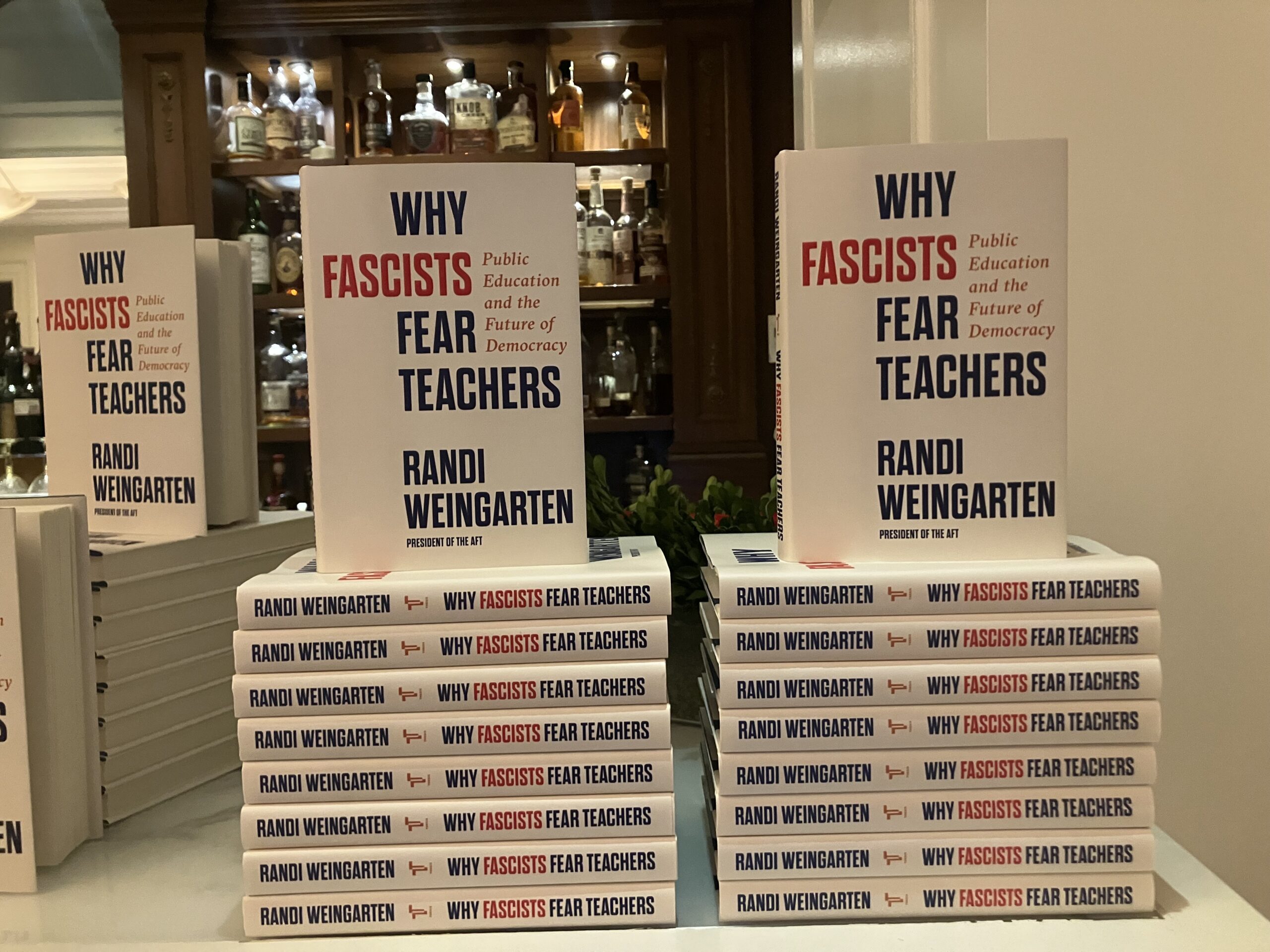
Randi Weingarten, in her latest book, Why Fascists Fear Teachers, explores the duty of America’s teachers and public education system in creating an educated public–one fit to resist a wave of manipulation and misinformation that seems all too common these days. Weingarten, a former social studies teacher, has been the president of the American Federation of Teachers for seventeen years and in her tenure, advocates for increased educational funding and reform, and the expansion of community-centered education.

The Jefferson Hotel was host to Weingarten’s D.C book launch last Thursday, attracting some of the district’s most ardent public education advocates. Senator Chuck Schumer and former Speaker of the House Nancy Pelosi made appearances, expressing their gratitude for Weingarten’s work.

Guests grazed on hor d’oeuvres and sliders as they circulated the room, eager to rub elbows with congresspeople and socialites. Most of the two hour event saw lively conversations and playful banter between discussions of Weingarten’s work, both as author and union president.
Randi Weingarten sat down with columnist Michael Tomasky for a conversation before the crowd and discussed the importance of education in a fraught world. She emphasized that creating communities is essential to the work educators do, noting the vital role that schools and educators play not just in academic instruction, but in fostering connections and building the social fabric that holds democratic society together. The conversation turned briefly to civics education, with Weingarten highlighting how important it is for young people to learn about their rights and responsibilities.

Randi Weingarten and Michael Tomasky
Weingarten also spoke about America’s founding principles, arguing that the country was founded on values that fight fascism and tyranny. She connected these foundational ideals to the current moment, suggesting that educators have a responsibility to help students understand the democratic traditions that have shaped the nation, and recognize when they’re being infringed upon. Seeing as Weingarten is both a former classroom teacher and longtime union leader, her observations about the challenges and opportunities in public education certainly held some weight.
The event concluded with a message that attendees could take away from the evening: that “joy is spiritual and political resistance.” This sentiment seemed to resonate with the gathered crowd of education advocates, policymakers, and supporters who had come to hear her speak about the crucial role teachers play in maintaining democratic values and institutions.