
Photo credit: Courtesy of Production
“I grew up in a small town in Mississippi and I was always interested in writing and wrote for the school paper, and stuff like that,” filmmaker Christie Herring told Hollywood on the Potomac. “I went to college and became interested in journalism. As a child I had also seen the film Mississippi Burning which made a huge impression on me just in terms of what art can do, and what film can do in bringing people together to talk about things and introduce difficult topics. As I went through college, I started to just slowly move away from writing and journalism to film. I took a lot of film theory classes at Duke University and just ended up moving towards documentaries. Right at the end of my time at Duke my hometown was having a mayoral election. My town was 75% African American, 25% white — I’m white, and for the very first time it looked like a black candidate really might win. It became a very big deal, and I decided to make a film about that.” Herring is the filmmaker of The Campaign.
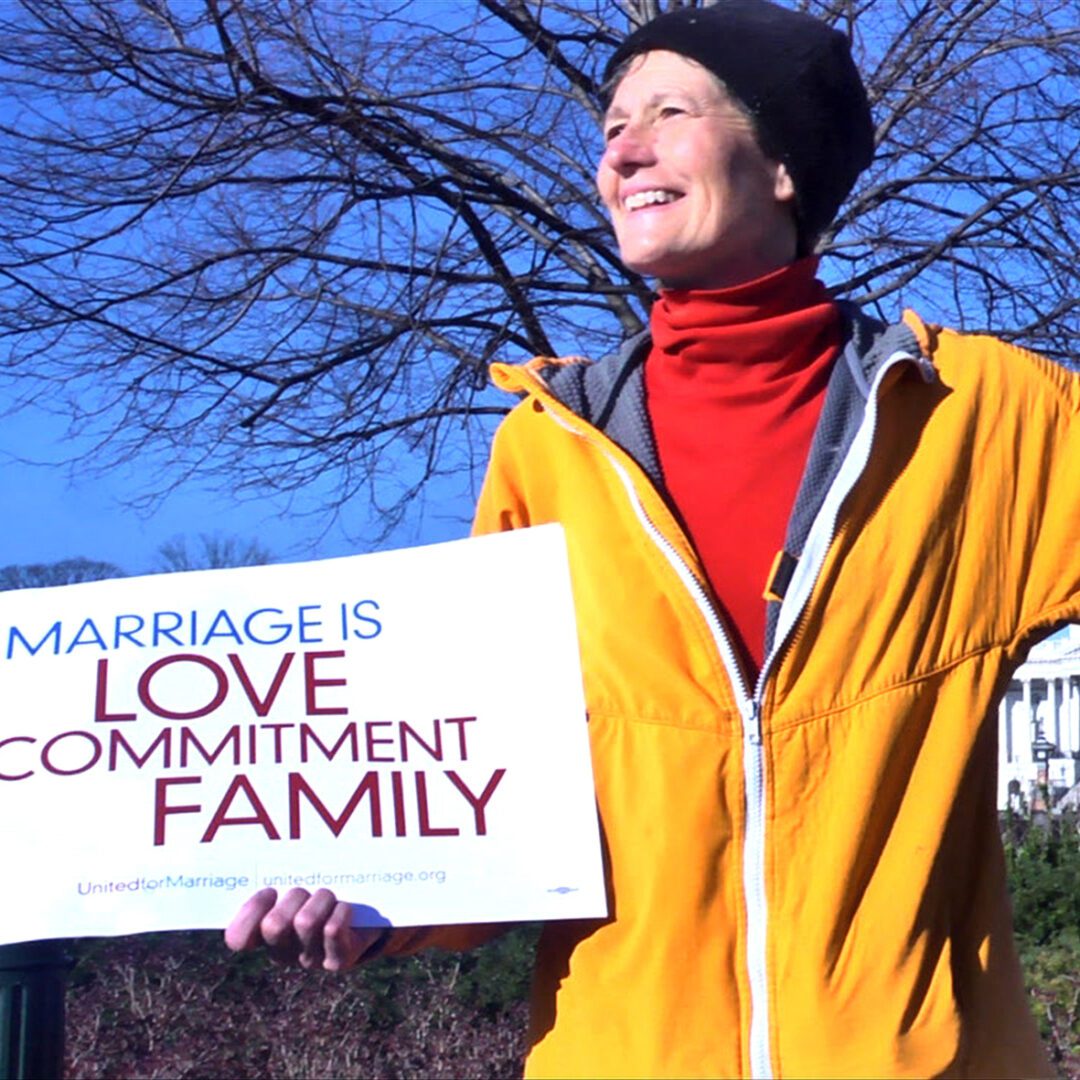
Christie Herring
“So that was my first foray into film, and it was for me at the time equally about the issues and how important the issues were, and telling the story, and sort of documenting what was happening in a place where I’d grown up and people didn’t really want to talk about racism and segregation,” she added. “And also finding my way in terms of what was my voice going to be, and what was going to be the platform for me to think about these things and my career. It all just kind of came together at that point.”
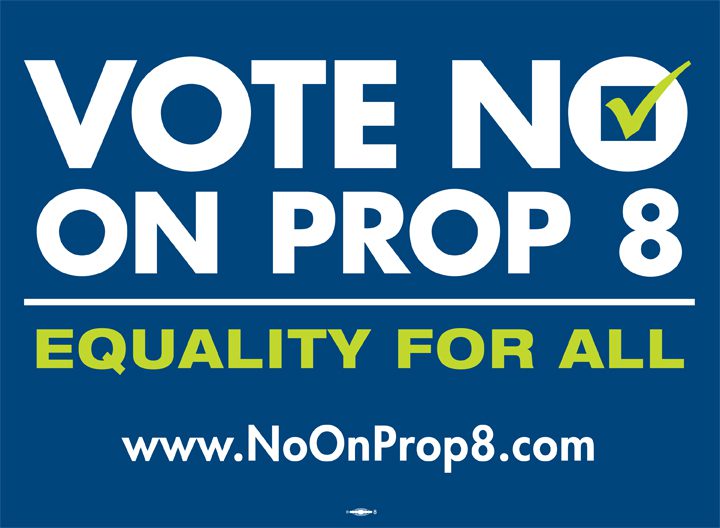
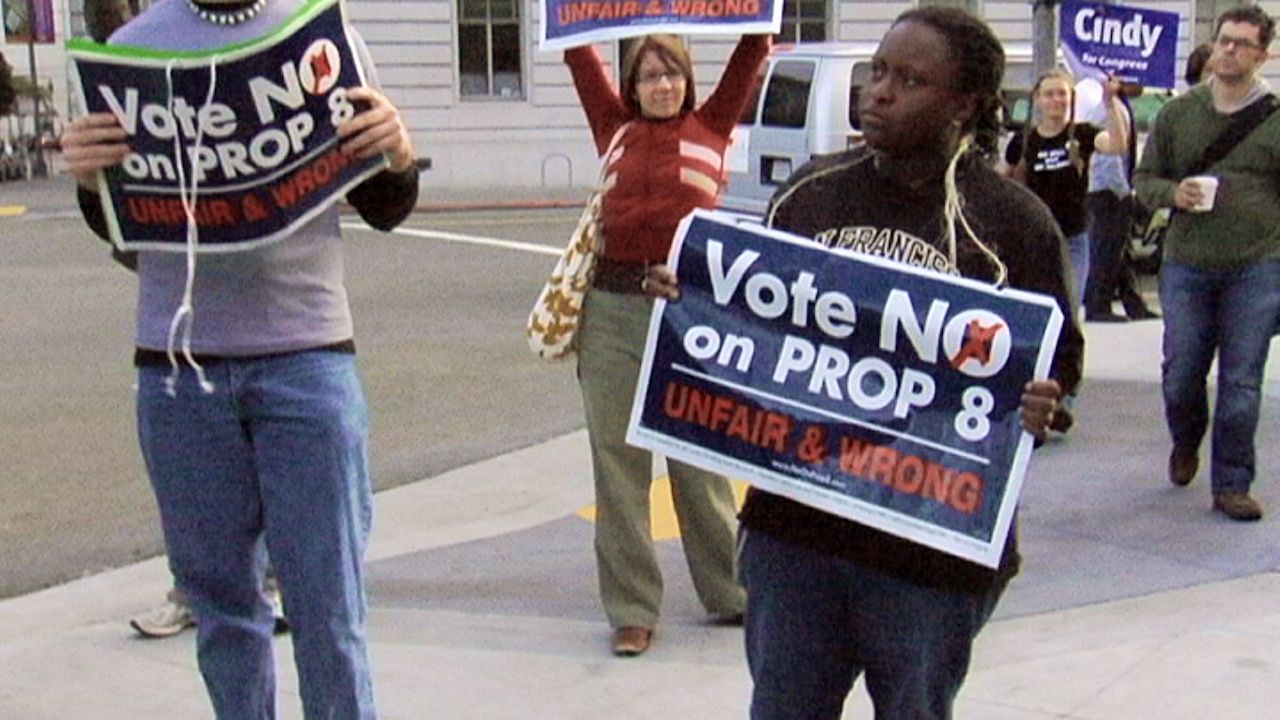
THE CAMPAIGN is a film by Herring that follows the people behind California’s historic “No on 8″ campaign to defend same-sex marriage through exclusive behind the scenes footage, interwoven with the national history of same-sex relationship recognition since the 1950s. The story focuses on an ensemble of five characters — Alison, Holli, Richard, Anne and Claudia — as they labor tirelessly to defeat Proposition 8, sacrificing time with the families they are fighting to protect. “The film positions their efforts within the context of shifting legal and political landscapes, from Anita Bryant’s “Save our Children,” to the invention of the word “Domestic Partner” in San Francisco, to Pat Buchanan’s declaration of a “culture war,” and finally to the wave of marriage bans that swept 41 states across the nation. The shocking passage of Prop 8 in seemingly LGBT-friendly California changed the landscape forever, both for the US LGBT equality movement and for the individual activists who dropped what they were doing and threw themselves into the largest social issue campaign the us has ever seen. Featuring a beautiful score from the Kronos Quartet and Jacob Garchik, THE CAMPAIGN emerges as an unprecedented installment of LGBT social history and a signature documentary on one of the most pressing civil rights issues of our times.” Production
Q: Hollywood on the Potomac: “When did you feel that you had a sense of urgency about public consciousness and discrimination, whether it’s race, or sex, or any of those things? When did that become a focus?”
A: Christie Herring: “I think that basic things on a human level such as how we treat other people, what is okay, what is not okay, those things I very much learned from my parents and from my community. It was very clear how we respected one another, and if we heard something racist out in the world, it would be discussed, or anything unkind about anyone, it would be discussed in the home that that was not okay. In terms of finding a way to say those things myself, and finding my own way of challenging them, I sort of found that the I got older, growing up, gong to college, I figured out being a woman in the world from Mississippi, issues just tended to come up frequently. You say the word Mississippi, and all kinds of questions immediately happen. I think after college is really when I started to think about policy, and how policy really affected the world, how policy affected people. It could be more than individual actions, and how these structural things really affect our culture. It’s when I actually moved to Boston and worked in public health research for about 4-1/2 years at Harvard School of Public Health, it was a huge education for me in terms of just kind of looking at culture in a different way, looking at how these things work in the world in a different way. After that experience, which was a huge education for me, I wanted to come back around to film and sort of put all of that together.”
The Campaign aired on Friday on KCET in Southern California. “It’s about what drives people to work on a policy level but on a grassroots level as a community coming together,” Herring said.
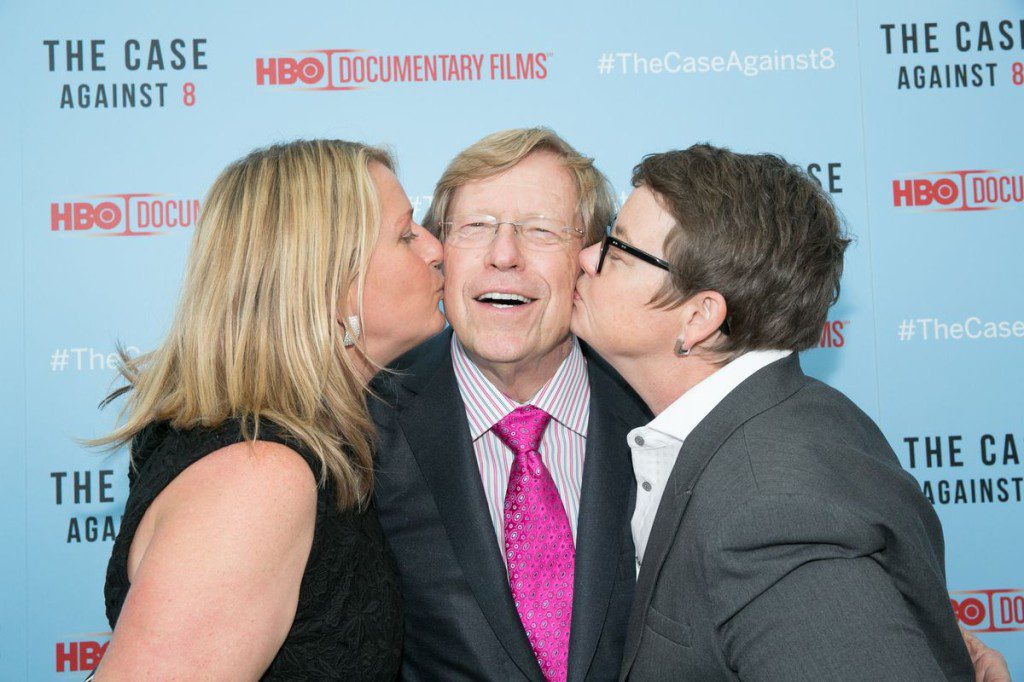
This summer, The Supreme Court of the United States (SCOTUS) will finally announce a decision on the historic marriage equality case currently before the justices. In June of last year, Hollywood on the Potomac attended HBO’s documentary “The Case Against Eight where we spoke to Perry plaintiff Sandy Stier, Perry plaintiff Kris Perry, Human Rights Campaign President Chad Griffin and Perry lawyer Ted Olson. Read the article here.
The Trailer:
“For a lot of people, the fact that millions of voters in California voted to ban same-sex marriage was very shocking, because people think of California as a very progressive state, a state that has sort of led the way on protecting same-sex couples and vulnerable people in the law over many, many, many decades, so it was very, very shocking,” she explained. “The people that I filmed, I’d been with them for months, and I had talked to them about do you think we’re going to win? What do you think you’re going to feel like if you win, or what are you going to feel like if you lose? I think that they all had their doubts at different points. I think that in the moment people were in shock.”
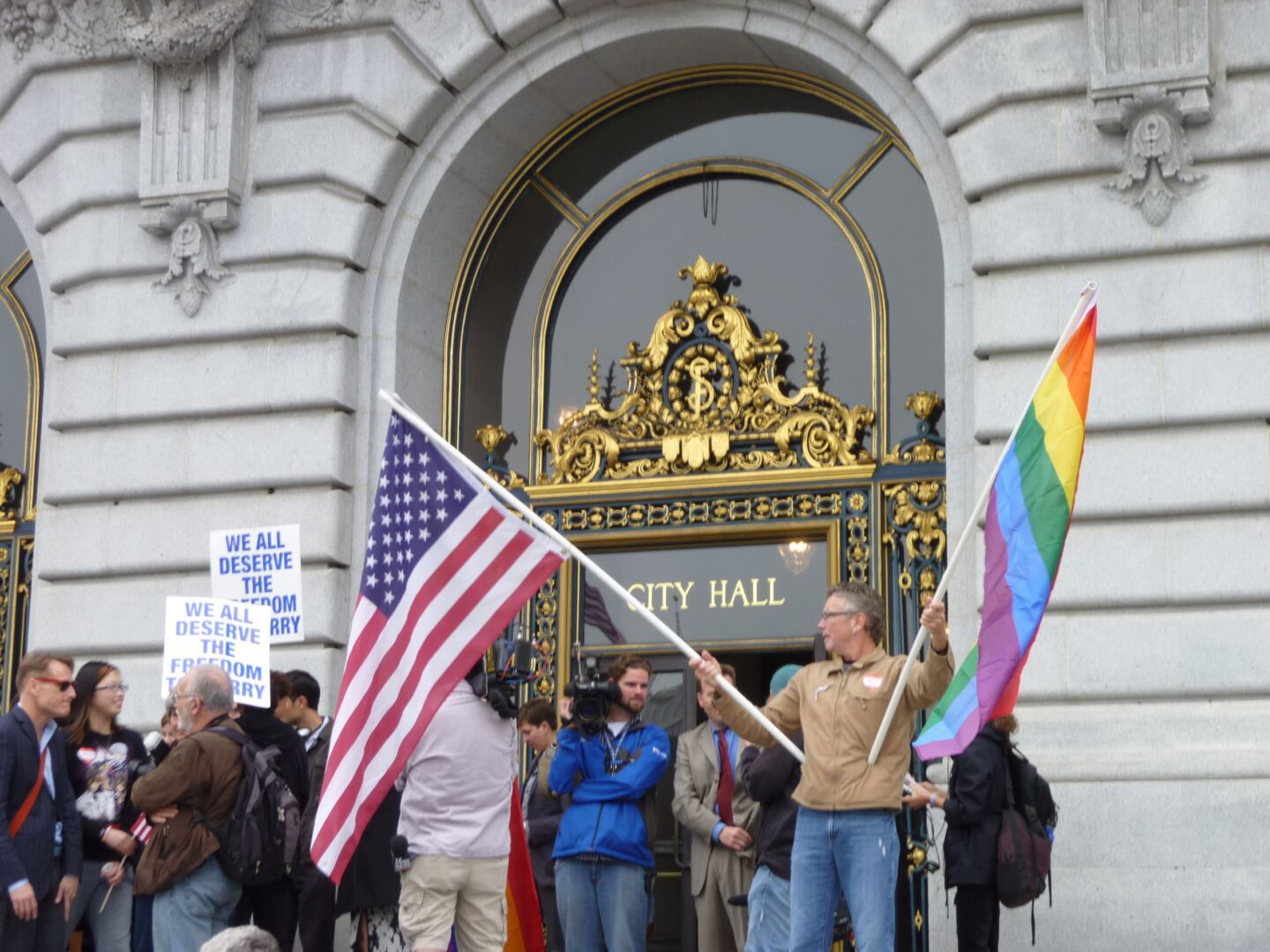
“People were very sad, very disappointed, very exhausted. They’d been working for days, and days, and days upon days. One of the last things in the film, all of the folks who worked on the campaign come back to the campaign headquarters to see each other and talk about what happened on election day. A lot of people had experienced a lot of homophobia on election day and a lot of overt harassment from people just driving by, and voters. So people came together to talk about that and think about what is next. In that immediate aftermath moment, it was not anger as much as just sadness and disappointment, and grief that their neighbors and people they knew had voted for this law that they felt was deeply discriminatory. In some cases there were people who worked on the campaign whose family members called to say they were glad Prop 8 passed.” You can purchase the DVD here.
“The Case Against Eight” by Hollywood on the Potomac: