
Photo credit: Courtesy of The Italian Embassy
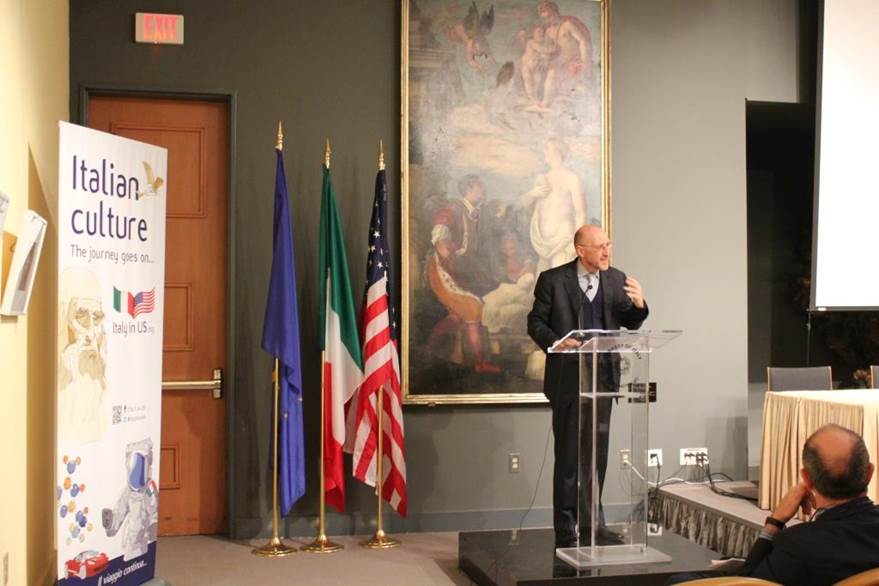
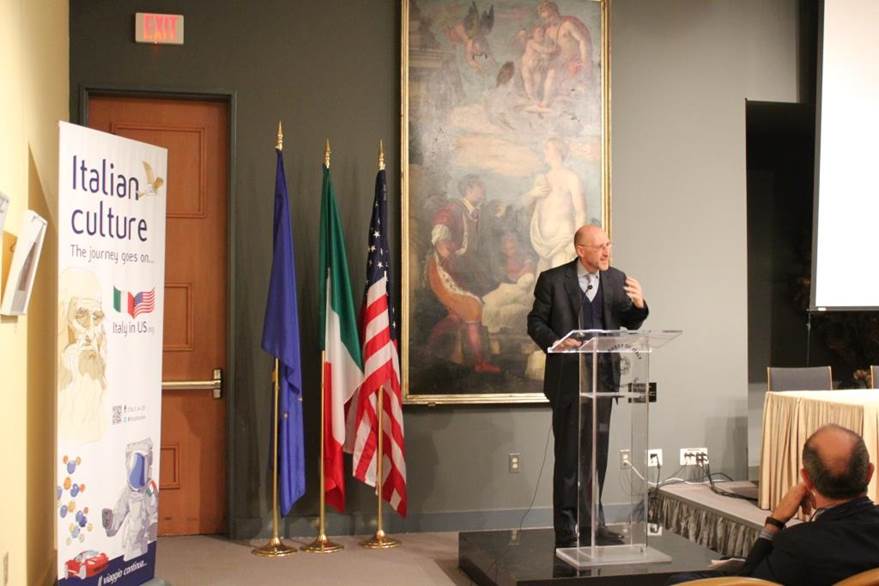
“For myself, a ‘storyteller’ rather than a mountain climber, doing this film meant closing the gap between the subject matter and me. Climate change, the retreat of the glaciers, nature, the mountains – the challenge was to bring the viewer with me on this trip and to involve and move him through the story of Fabiano. In this way, I see the viewers get close to the story and participate in the larger issue and together we can all build on the solution reexamining our lifestyles,“ said director Tommaso Valente at a screening of On the Trails of the Glaciers – Mission in Alaska at The Embassy of Italy as part of the Environmental Film Festival in the Nation’s Capital.
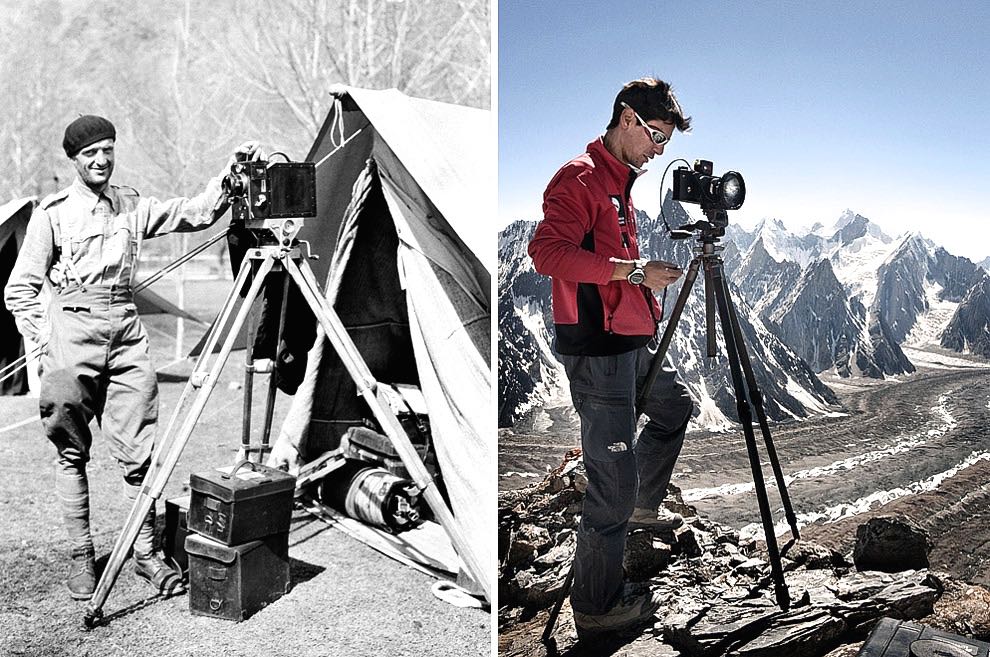
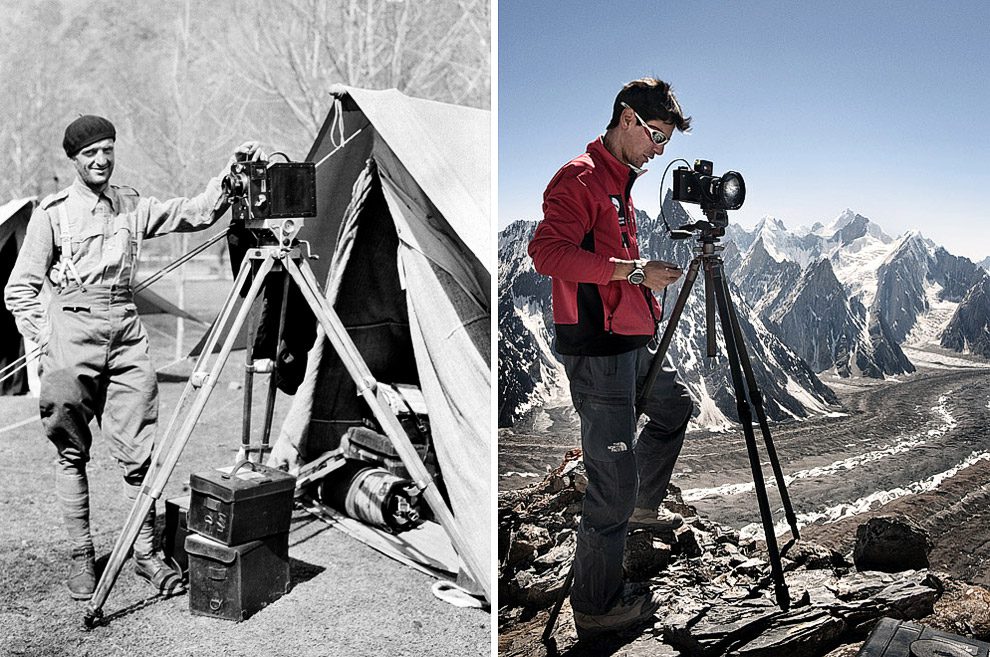
Massimo Terzano and Fabiano Ventura
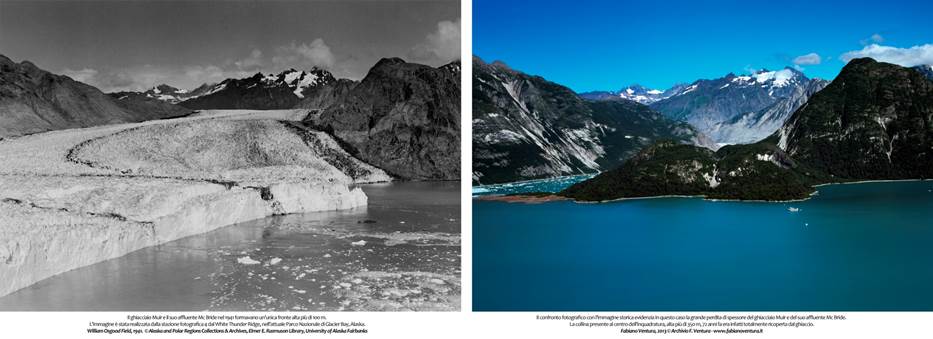
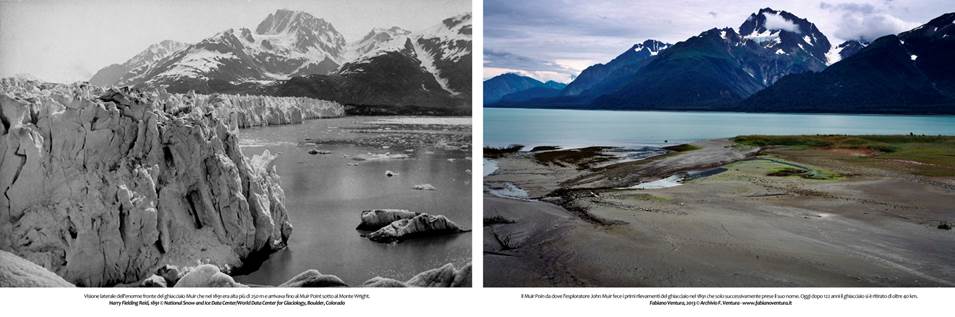
“On the Trails of the Glaciers is an interdisciplinary project of Macromicro – a non profit Association,” according to the producers. “The project, thanks to specialized photographers and a unique international Scientific Committee, conjugates photographic comparison and scientific research to analyze the effects of climate change on the biggest mountain glaciers of the Earth. Glaciers are indeed the most sensitive and reliable climatic indicators, which allow the study of the current climatic situation and of its evolution through the time. Analyzing the glaciers is somehow like opening a database, a natural archive, which describes past and present history of our living environment. Through different expeditions to the most important mountain chains of the world, the project realizes glaciological measurements and new photographic images. The latter reproduce those taken by photographer-explorers and are shot from the same exact geographic spot and in the same period of the year.”
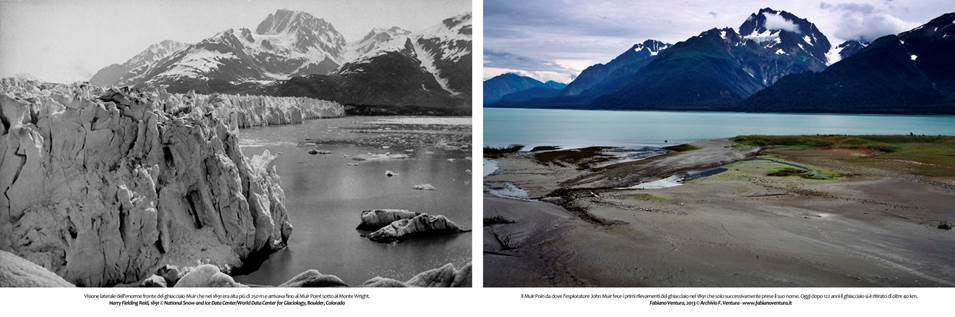
After the successful expedition to Karakorum and to Caucasus, photographer Fabiano Ventura and his team of experts continue their mission to study the effects of climate change on the world’s largest glaciers. This expedition took them to Alaska. “Thanks to the cold weather and the frequent precipitations, glaciers are found in Alaska at low altitudes; they pass through the long valleys and merge just before they arrive at the sea. Their particular characteristics make Alaska’s glaciers very interesting from a scientific point of view.” Production
We didn’t see our favorite environmentalist former VP Al Gore in the audience but we’re sure he is available to answer the question of whether or not global warming is melting the planet’s glaciers or if there is no reason to worry. What better way to find out than by traveling to some of the earth’s most frigid areas and comparing the situation today with images taken over a century ago. That is precisely what Italian photographer Fabiano Ventura and his team of international glaciologists have been doing for several years. Armed with still and video cameras, the group tracks the major glaciers of the world’s largest mountain ranges. After two expeditions, one to the Karakorum and another to the Caucasus, the team’s third expedition was to Alaska. The conclusions are alarming: about 90% of Alaska’s glaciers are retreating.
You be the judge:
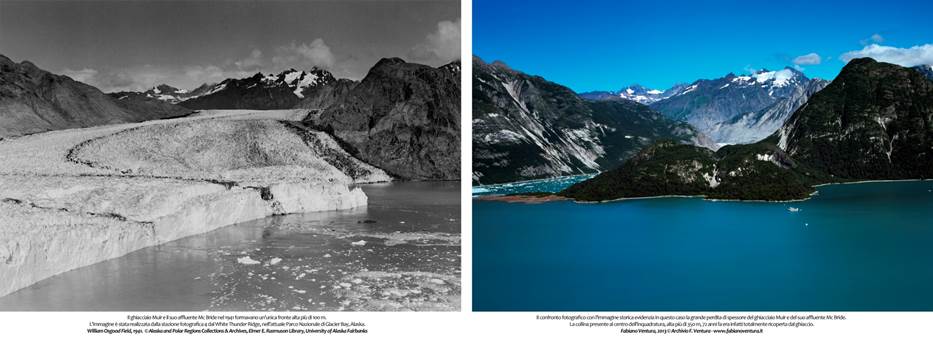
“The third expedition of the project On the Trails of the Glaciers began at the end of July 2013. The selected area was the Glacier Bay National Park in Alaska,” said Ventura through a Q and A since he was not able to attend the screening. “I selected this place since I wanted to document glacial dynamics not always directly connected with climate changes. Indeed, in Alaska, the global warming triggered the glaciers shrinkage, but then factors intervened such as sea currents, water salinity, deep and morphology of the seabed. For the overall objective of the project indeed, it was my intention to document all different kinds of phenomena that contribute to glaciers’ shrinkage as to better understand them without just exploiting the climate change theme. During the third expedition we could explore a territory of particular interest from an ecological and glaciological point of view, where the harsh cold climate, the abundant precipitations and the typical glaciers conformation – with some ending directly into the sea – create an almost unique condition on Earth.”
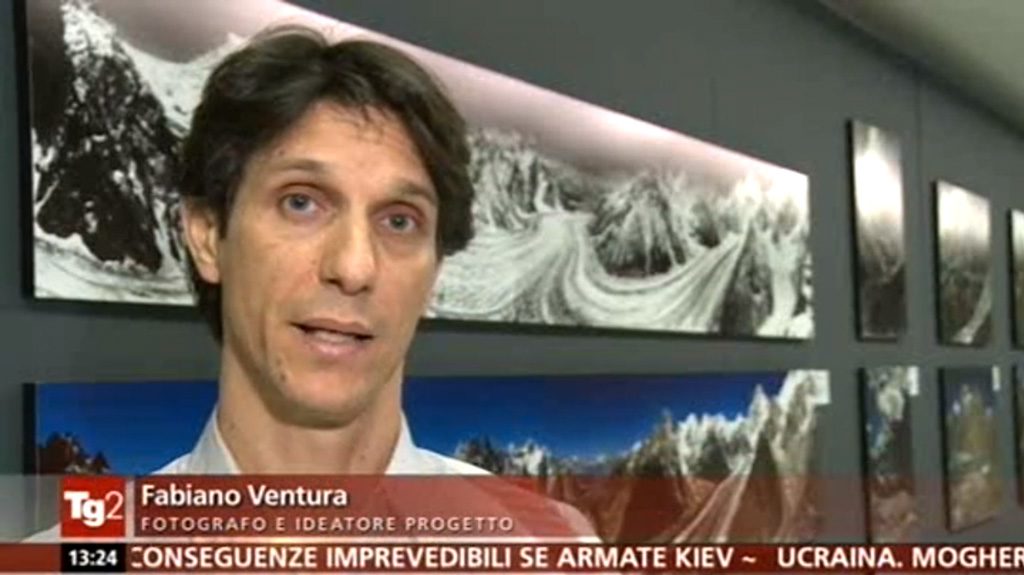
“I grew up traveling and with a love of nature and have always felt a particularly strong bond with mountains,” he said. “Over the years I have combined mountaineering, rock climbing and back-country skiing with my professional activity as a photographer. Through my work I strive to portray the most extreme and wildest facets of nature, and also to provide documentary evidence of the results of humanity’s interaction with the natural world. What motivates me is a desire to communicate the importance of knowing and respecting nature, not only so we can enjoy its beauty, but also to preserve humans as a species and human civilization.”
“From a technical standpoint,” he explained, “I prefer working in large format as this lets me print large format high definition work that gives the viewer the sensation of actually being in the landscape. My work has been exhibited in Rome, Milan, Turin, Biella, Paris and Bolzano at the Messner Mountain Museum in Firmian. By opting for high definition photographic equipment to take photos of places with a striking visual and emotional impact I am able to produce prints which are ideal both for getting messages across at exhibitions and as elements of interior design.”
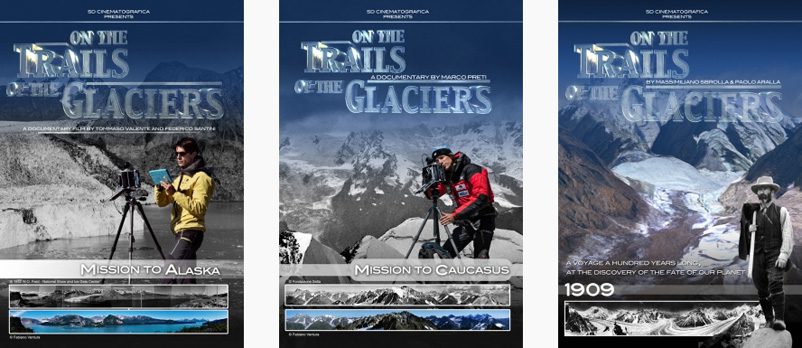
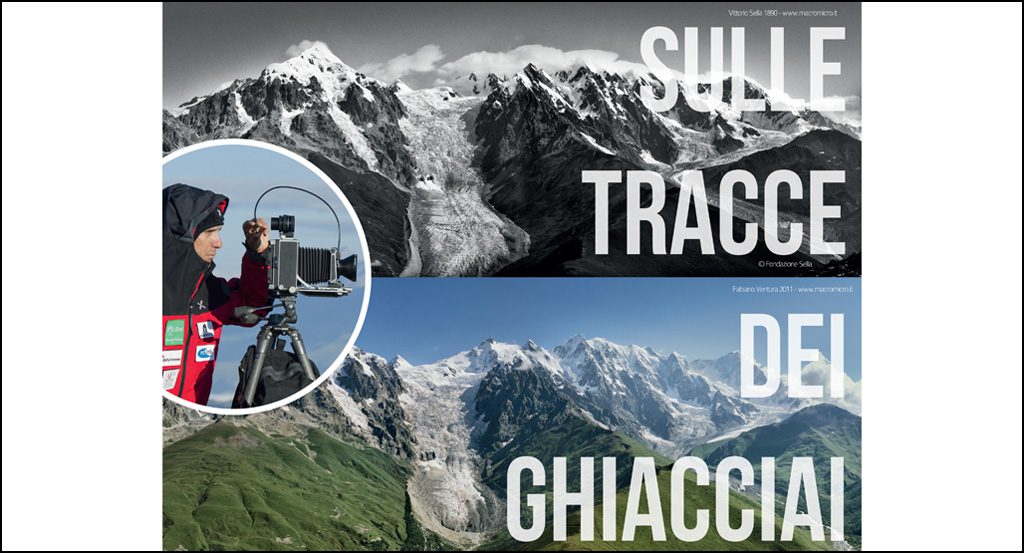
“Since 2007 I have been working on the large-scale project entitled On the Trail of the Glaciers. Through expeditions to the world’s principal mountain chains the project studies the effects of climate change on the planet’s most important glaciers, bringing together photography, historical research and scientific observation. By comparing archive images with photos take in modern times and data collected on site, the Project’s International Scientific Committee is able to analyze the state of health of the world’s most important glaciers,” he added. “This approach offers an incomparable means to measuring climatic conditions and, more importantly, their evolution over time. The initial three expeditions were to Karakorum (2009), the Caucuses (2011) and Alaska (2013) with all the mission objectives being met, including repeat photography of the archive pictures, GPS referencing of the points from which the photos were shot and glaciological measuring by the researchers on the expedition. All three expeditions produced a considerable body of scientific data as well as photos and film, which have been used in exhibitions, conferences, publications and three television documentaries for international broadcasters (ZDF, Arte, RAI, RTSI, NHK).”
“I am now focused on organizing the fourth expedition of the series in Patagonia in the winter of 2015/2016, to be followed by expeditions to the Himalayas and the Alps,” he concluded.
“This documentary is a fascinating exploration of a multifaceted topic and invites us to reflect on the health of our planet,” noted Italy’s Ambassador to the U.S., Claudio Bisogniero, adding that “the theme falls perfectly in line with Expo 2015, the extraordinary world’s fair with over 140 participating countries focusing on food, agriculture, environment and sustainable global that will take place in Milan from May to October of this year.